
Customer segmentation means dividing your customers into groups that share similar needs, behavior or value, so you can send each group the right message, offer and level of service. Instead of sending the same newsletter and discount to everyone, you can welcome new customers, reward loyal ones, win back those who have gone quiet and give your best accounts extra attention. This guide explains the main types of customer segmentation, shows practical customer segmentation examples, walks through how to segment customers step by step and explains how segmentation in a CRM turns groups into targeted campaigns. It is written for owners, marketers and sales leads at small and mid-sized businesses.
Key takeaways
- Customer segmentation groups customers by shared traits so marketing, sales and service can treat each group differently.
- The most useful segments for small businesses are usually based on behavior, value and lifecycle stage, not only demographics.
- Every segment needs a clear rule, a reason to exist and a specific action, such as a message, offer or task.
- A CRM keeps segments up to date automatically as customers buy, open messages or go inactive.
- Start with three to five segments, measure the results and refine them over time.
What is customer segmentation?
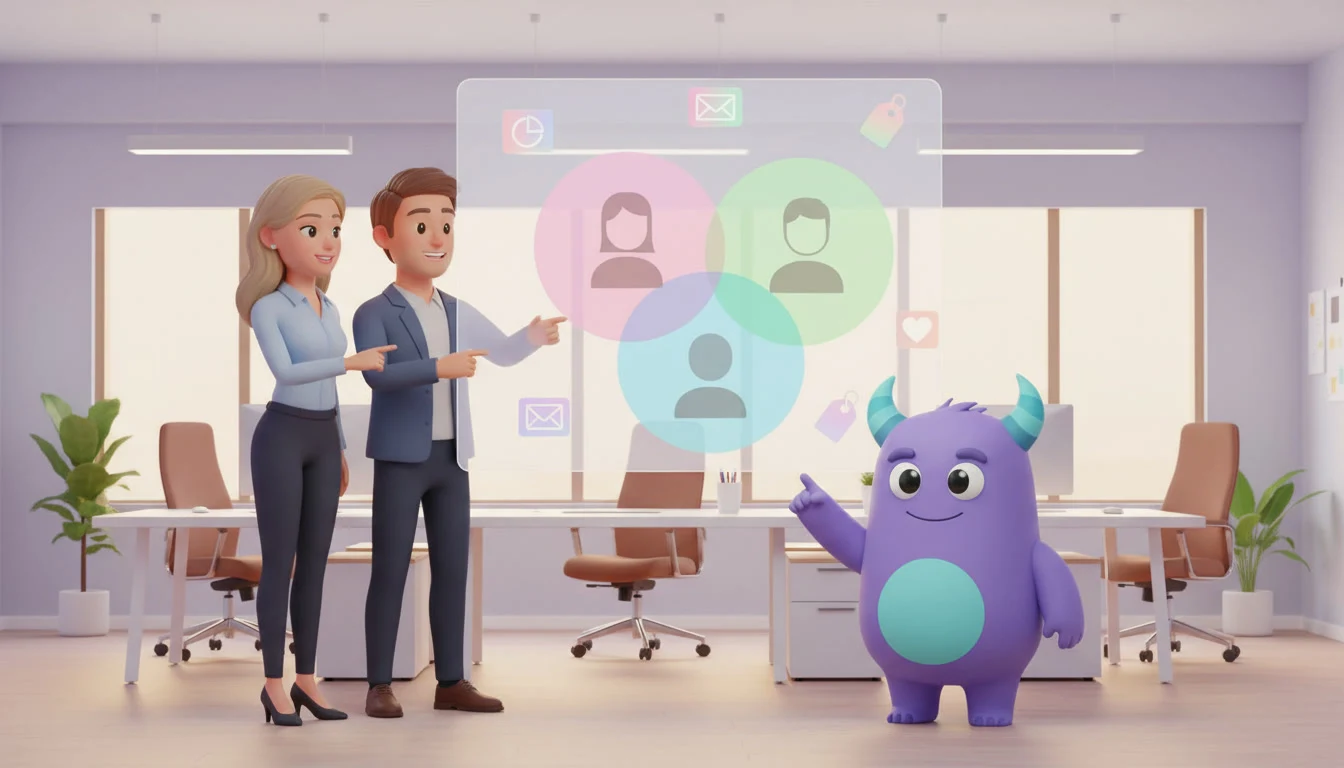
Customer segmentation is the process of dividing a customer base into groups based on shared characteristics, such as who they are, where they are, what they buy, how often they buy or what they need. Each group, or segment, receives communication, offers and service designed for it. The goal is relevance: customers get messages that match their situation, and your team spends time where it matters most.
Segmentation is not the same as personalization, although the two work together. Segmentation decides which group a customer belongs to. Personalization then adapts details such as the name, the product or the timing for each person inside that group.
Why customer segmentation matters
More relevant messages
A new customer, a loyal regular and someone who has not bought in a year need different messages. When everyone receives the same email, many people ignore it or unsubscribe.
Better use of budget and time
Discounts, calls and personal attention are limited resources. Segmentation helps you focus them on the customers most likely to respond or most valuable to keep.
Clearer view of the business
Looking at segments shows you which groups are growing, which are shrinking and where revenue really comes from. That insight helps with pricing, product and service decisions.
Earlier warning signs
A segment of customers who used to buy often but have gone quiet is an early warning. Spotting it lets you act before they are lost for good. For broader tactics, see these customer retention strategies.
Types of customer segmentation
There are several common ways to segment customers. Most businesses combine two or three of them. The table below summarizes the main types:
| Segmentation type | Based on | Example segment | Example action |
|---|---|---|---|
| Demographic | Age, gender, family status, job role | Parents with young children | Family-friendly offers and timing |
| Geographic | Country, city, district, distance from your location | Customers near a new branch | Opening invitation with directions |
| Firmographic (B2B) | Industry, company size, region | Small companies in retail | Case examples and onboarding for retail |
| Behavioral | Purchases, visits, product usage, email engagement | Bought once, never returned | Second-purchase incentive |
| Value-based | Total spend, margin, customer lifetime value | Top customers by revenue | Personal check-in and priority service |
| Lifecycle stage | Lead, new customer, active, at risk, lapsed | Inactive for a long period | Win-back campaign |
| Needs-based | Goals, problems, preferences, feedback | Customers who asked about a feature | Update when the feature is available |
Value-based and behavioral segmentation often overlap with RFM, which scores customers by recency, frequency and monetary value. If you want a ready-made scoring method, read the guide to RFM analysis. To estimate customer value more precisely, see how to calculate customer lifetime value.
Customer segmentation examples
These customer segmentation examples show how different businesses might group customers. They are illustrations, not benchmarks.
Restaurant or cafe
Weekday lunch regulars, weekend family diners, customers who only order delivery and guests who have not visited for several months. Each group gets a different offer: a lunch loyalty reward, a family weekend menu, a delivery promotion or a "we miss you" message.
Beauty salon or clinic
Clients due for their next appointment, clients who book one service but not others and first-time visitors. Reminders, cross-service offers and a welcome sequence fit these groups.
Retail store
Customers who buy in a specific category, high-spending loyalty members and people who bought once during a sale. Category news, early access and a second-purchase offer can work well. A loyalty points program adds another signal for segmentation.
B2B service company
Clients by industry, by contract size and by renewal date, plus clients who gave low satisfaction scores. Account reviews, renewal reminders and personal follow-up calls can be planned for each group. Feedback from an NPS survey is a useful needs-based signal.
How to segment customers: step by step
- Start with a goal. Decide what you want to improve, such as repeat purchases, renewals, upsells or win-backs. The goal decides which segments matter.
- Check your data. List the fields you already have, such as purchase history, last visit, location, source and consent for marketing. Clean duplicates and fill obvious gaps.
- Choose two or three criteria. For most small businesses, a mix of behavior, value and lifecycle stage is a strong start.
- Define clear rules. Write each segment as a rule anyone can understand, for example "bought at least three times, last purchase within the last 90 days".
- Keep the number small. Three to five segments are easier to manage than twenty. Each one should be large enough to act on.
- Assign an action to each segment. A message, an offer, a task for the sales team or a change in service level. A segment without an action is just a report.
- Measure and refine. Compare results between segments, adjust rules and retire segments that do not lead to different actions.
Segmentation in a CRM
Segmentation in a CRM is far easier to keep current than segmentation in a spreadsheet. A spreadsheet is a snapshot: it is out of date as soon as a customer buys again. In a CRM, segments are usually saved filters or rules that update automatically as new purchases, visits, messages and feedback are recorded.
Useful CRM features for segmentation include:
- Custom fields and tags for traits such as industry, interests or preferred branch.
- Saved filters that combine conditions, such as last purchase date and total spend.
- Lifecycle stages that move customers from new to active to at risk. Learn more about customer lifecycle management.
- Automations that send a message or create a task when a customer enters a segment. See how CRM automation works.
- Reports that show the size and revenue of each segment over time.
Turning segments into targeted campaigns
Targeted campaigns are where segmentation pays off. For each segment, decide the message, the channel, the timing and what success looks like.
Copyable segment-to-campaign plan
- New customers: "Welcome, [Name]. Here is how to get the most from [product or service]." Follow up with a helpful tip a week later.
- Loyal customers: "Thank you for being with us, [Name]. As one of our regular customers, you get early access to [offer]."
- At-risk customers: "Hi [Name], we have not seen you in a while. Is there anything we can do better?" Create a task for a personal call for high-value accounts.
- Lapsed customers: "We miss you, [Name]. Here is what is new since your last visit, and a small thank-you if you come back."
Respect consent and frequency. Only send marketing messages to customers who agreed to receive them, and avoid placing the same person in several campaigns at once.
How to do it in LUA CRM
Customer profiles
Keep contact details, purchases, tags, consent, feedback and conversations on one customer card.
Segments and filters
Build segments from fields, tags, purchase history and lifecycle stage, and keep them updated automatically.
Automations
Send welcome, loyalty, win-back and follow-up messages, or create tasks for your team, when customers enter a segment.
Reports
Compare segment size, revenue and campaign results on dashboards.
Want to send the right message to the right customers? Try LUA CRM and build your first segments.
Common segmentation mistakes
- Too many segments: small groups are hard to manage and rarely get their own campaign.
- Segments without actions: if every segment gets the same message, the segmentation adds nothing.
- Stale data: segments built once and never updated quickly become wrong.
- Only demographics: what customers do usually predicts their next step better than who they are.
Frequently asked questions
Start with three to five. Add more only when a new group clearly needs a different message or action.
Customer segmentation is the general practice of grouping customers by any shared trait. RFM analysis is one specific method that scores customers by recency, frequency and monetary value.
No. Purchase dates, purchase amounts, location and source are enough for useful first segments. You can add more detail as your data grows.
Ideally they update automatically in your CRM. If you use spreadsheets, review them at least monthly.
Yes. B2B companies often segment by industry, company size, contract value, renewal date and product usage.
Conclusion
Customer segmentation helps you stop treating every customer the same and start sending messages that fit. Begin with a clear goal, a few simple segments and one action for each, then let your CRM keep the groups up to date and measure what works.