
RFM analysis is a simple way to segment customers by how recently they bought, how often they buy and how much they spend, so you know who to reward, who to win back and who to leave alone. It uses data most businesses already have in their CRM or sales records, and it does not need a data science team. This guide is for business owners, marketers and customer success teams who want to send fewer generic campaigns and more messages that match each customer's real behavior.
Key takeaways
- RFM stands for Recency, Frequency and Monetary value: three facts about each customer's purchase history.
- Each customer gets a score from 1 to 5 for each factor, which creates clear segments such as Champions, Loyal, At risk and Lost.
- Recency is often the strongest signal of whether a customer is still engaged, so many teams start there.
- Every segment needs its own action: rewards for top customers, nurturing for new ones and win-back offers for those drifting away.
- RFM is most useful when scores update automatically in your CRM and campaigns are triggered by segment changes.
What is RFM analysis?
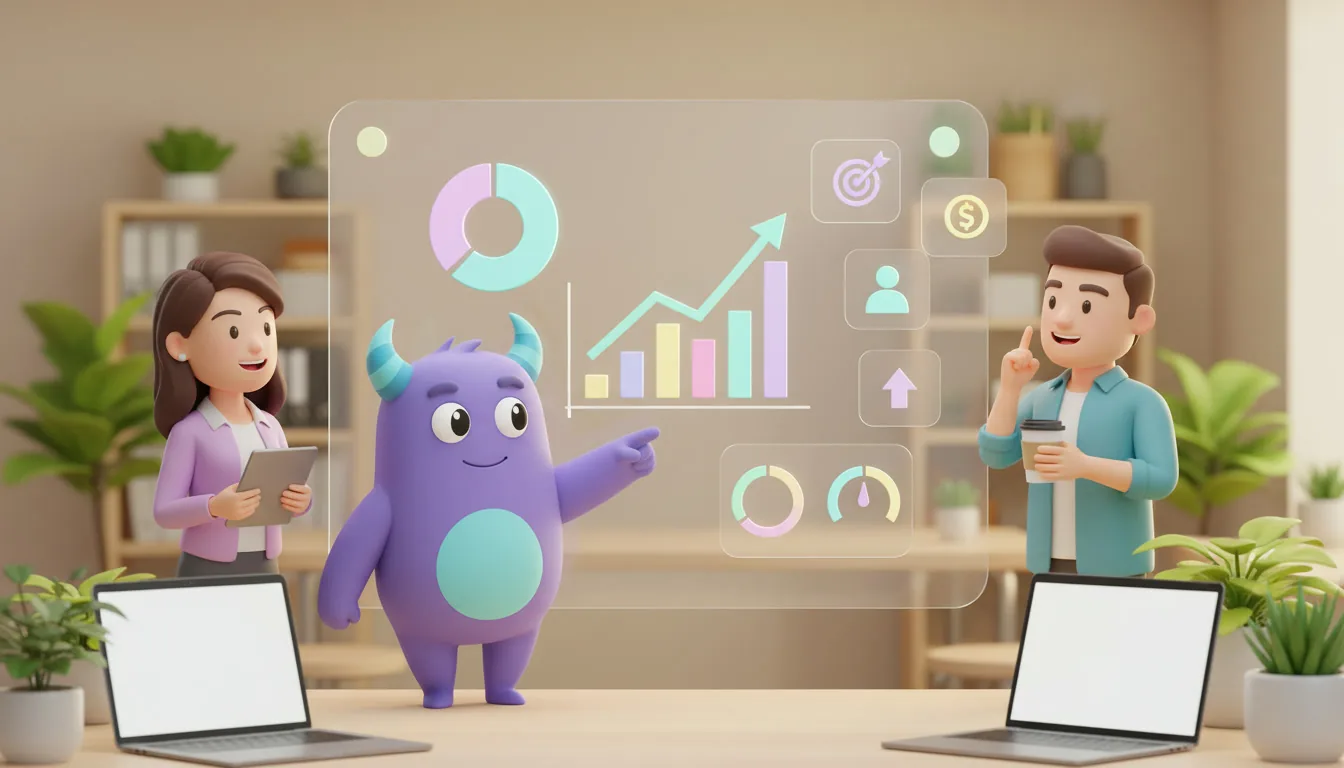
RFM analysis is a customer segmentation method that ranks customers on three dimensions: Recency (days since the last purchase), Frequency (number of purchases in a chosen period) and Monetary value (total spend in that period). Combining the three scores shows how valuable and how engaged each customer is right now, so you can tailor offers, service and timing to each group.
Why RFM segmentation works
It is based on behavior, not guesses
Age, city or job title say little about whether someone will buy again. Purchase behavior says much more. RFM segmentation uses what customers actually did, which makes it practical for almost any business with repeat purchases.
It is easy to explain
A sales manager, a marketer and an owner can all understand "bought recently, buys often, spends a lot". That makes it easier to agree on actions.
It points to clear next steps
Each segment suggests a different action, from a thank-you note to a reactivation offer. You stop sending the same discount to everyone, including people who would have bought anyway.
The data you need
For each customer, you need three things from your CRM, POS or order history:
- The date of the most recent purchase or paid visit.
- The number of purchases in your analysis window, for example the last 12 months.
- The total revenue from that customer in the same window.
Choose a window that matches your buying cycle. A cafe might look at the last 3 to 6 months; a B2B service company might need 12 to 24 months. Before scoring, merge duplicate contacts and remove test or internal orders, otherwise the scores will be misleading.
How to calculate RFM scores
The most common approach is to sort customers by each factor and split them into five equal groups (quintiles). The best fifth gets a score of 5 and the lowest fifth gets 1. For recency, fewer days since the last purchase means a higher score. For frequency and monetary value, higher numbers mean a higher score.
Each customer ends up with a three-digit code, such as 5-5-5 for a recent, frequent, high-spending customer or 1-1-2 for someone who bought once a long time ago. Some teams combine frequency and monetary into one score to keep the number of segments manageable. If your customer base is small, you can use fixed thresholds instead of quintiles, for example "last purchase within 30 days = 5".
RFM segments and what to do with each
You do not need all 125 possible combinations. Group them into a handful of segments your team can act on. Here is an illustrative mapping you can adapt:
| Segment | Typical scores (R / F / M) | Who they are | Suggested action |
|---|---|---|---|
| Champions | R 5, F 4–5, M 4–5 | Bought recently, buy often, spend the most | Thank them, offer early access, ask for reviews or referrals |
| Loyal customers | R 3–5, F 4–5 | Buy regularly, respond well to contact | Loyalty rewards, cross-sell related products or services |
| Potential loyalists | R 4–5, F 2–3 | Recent customers with a few purchases | Onboarding tips, a reason to come back soon, membership invitation |
| New customers | R 5, F 1 | Made their first purchase recently | Welcome series and a helpful follow-up |
| Need attention | R 3, F 2–3, M 2–3 | Average customers starting to slow down | Personal check-in, limited-time offer |
| At risk | R 1–2, F 3–5, M 3–5 | Used to buy often and spend well, but not lately | Win-back message, ask for feedback, personal call for top accounts |
| Lost | R 1, F 1–2 | Bought once or rarely, long ago | One reactivation attempt, then reduce contact |
The "At risk" group often deserves the most urgent attention, because these customers were valuable before. Understanding why they slow down is closely linked to customer churn.
Illustrative example: scoring five customers
The numbers below are invented to show the method; they are not benchmarks.
Imagine a small beauty supply shop analyzing the last 12 months:
- Customer A: last order 5 days ago, 14 orders, high total spend. Scores 5-5-5: a Champion.
- Customer B: last order 10 days ago, 1 order. Scores 5-1-1: a New customer who needs a welcome series.
- Customer C: last order 200 days ago, 9 orders, high spend. Scores 1-4-4: At risk, worth a personal message.
- Customer D: last order 60 days ago, 4 orders, medium spend. Scores 3-3-3: Needs attention.
- Customer E: last order 330 days ago, 1 small order. Scores 1-1-1: Lost; one reactivation try is enough.
Instead of one newsletter for all five, the shop now sends five different, more relevant messages.
How to run RFM analysis in your CRM (step by step)
- Define the window. Pick a period that reflects your typical buying cycle.
- Clean the data. Merge duplicates, link orders to the right contact and exclude refunds or test orders.
- Calculate the three values. Days since last purchase, number of purchases and total spend per customer.
- Assign scores. Use quintiles or fixed thresholds to give each customer a 1–5 score per factor.
- Map scores to segments. Start with five to seven segments, like the table above.
- Save segments in the CRM. Store the scores and segment as fields or tags on each contact.
- Attach actions. Create campaigns, tasks or automations for each segment.
- Refresh regularly. Recalculate monthly or weekly, and trigger messages when a customer moves between segments, for example from Loyal to At risk.
- Measure results. Compare repeat purchase and reactivation rates by segment over time.
Automating these updates is a good use of CRM automation.
Common RFM mistakes to avoid
Using the wrong time window
A window that is too short makes loyal seasonal customers look lost; one that is too long hides recent changes.
Treating it as a one-off report
Scores lose value quickly. RFM works best as a living segmentation that updates and drives actions.
Discounting the best customers
Champions often do not need a discount to buy. Recognition, early access and great service may be a better fit.
Ignoring context
RFM does not know about complaints, contract terms or product fit. Combine it with notes, feedback and your team's judgment.
How RFM fits with other customer metrics
RFM looks backward at recent behavior. Customer lifetime value estimates a customer's total worth over time, while lead scoring ranks prospects who have not bought yet. Used together, they help you decide where to spend time and budget across the whole customer lifecycle.
How to do it in LUA CRM
Customer cards with purchase history
Keep orders, visits, payments and conversations on one customer card so recency, frequency and spend come from one source.
Segments and tags
Store RFM scores or segment names as fields or tags, and filter customer lists by segment.
Automations and tasks
Trigger welcome, loyalty and win-back messages, or create a call task when a key account moves to At risk.
Reports
Track how many customers sit in each segment and how that changes month to month.
Ready to stop sending the same message to everyone? Try LUA CRM and build your first RFM segments.
Frequently asked questions
Recency, Frequency and Monetary value: how recently a customer bought, how often they buy and how much they spend in a chosen period.
Yes, if customers buy or renew more than once. For subscriptions or contracts, you can use renewals, orders or paid invoices instead of retail purchases.
Monthly is a good start for most businesses. Fast-moving businesses such as cafes or online shops may benefit from weekly updates.
Yes, for a one-time analysis. Keeping it in your CRM makes it easier to update scores automatically and act on segment changes.
Start with five to seven segments your team can act on. You can split them further once the basic campaigns are working.
Conclusion
RFM analysis turns raw purchase history into clear customer groups and clear actions. Start with clean data, a sensible time window and a few segments, connect each segment to one message or task, and refresh the scores regularly. Over time, you will spend less effort on generic campaigns and more on the customers who matter most.