
When businesses begin evaluating management software, one of the most common — and often misunderstood — questions they face is the difference between ERP and CRM systems. At a surface level, both platforms appear similar. They store customer information, generate reports, offer dashboards, and promise greater organization. Because of this overlap, many founders assume they are interchangeable or that implementing one will automatically resolve operational inefficiencies across the entire company.
However, while ERP and CRM systems may share certain technical components, their strategic roles inside a business are fundamentally different. Each system addresses a distinct layer of organizational complexity. Confusing the two can lead to fragmented infrastructure, duplicated data, operational blind spots, and scaling challenges that only become more expensive to correct over time.
For early-stage companies, the distinction may not feel urgent. But as revenue increases, teams expand, workflows multiply, and financial management becomes more nuanced, the separation between managing customers and managing the entire organization becomes critical. At that point, the decision is no longer about software preference — it is about structural maturity.
What Is CRM and What Problem Does It Solve?
CRM, or Customer Relationship Management, is designed to help businesses attract, manage, and retain customers more effectively. Its primary focus is revenue generation through structured sales processes and organized communication.
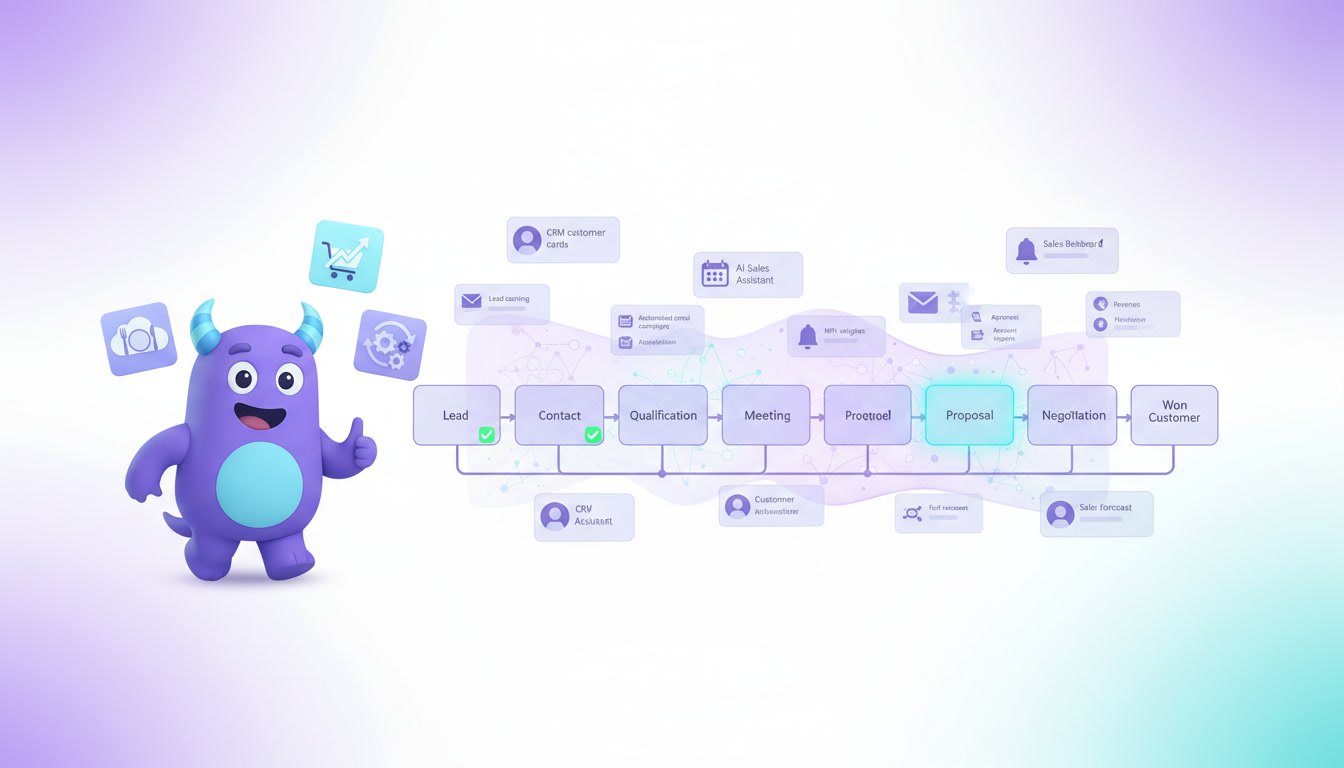
A CRM system centralizes lead tracking, sales pipelines, communication history, follow-ups, and deal management. It ensures that no potential customer is forgotten, no opportunity is overlooked, and no communication is lost between team members.
At its core, CRM answers one essential question: how can we improve customer acquisition and relationship management in a predictable and scalable way?
For businesses struggling with inconsistent follow-ups, unclear sales pipelines, or limited visibility into deal progress, CRM becomes a foundational tool. It increases revenue efficiency by bringing discipline to customer interactions.
What Is ERP and Why Is It Different?
ERP, or Enterprise Resource Planning, extends far beyond customer acquisition. Instead of focusing primarily on sales, ERP systems are designed to integrate and coordinate the entire operational backbone of the company.
An ERP system connects finance, invoicing, expense tracking, project management, resource allocation, workflow automation, reporting, and often HR or inventory management into a unified environment. Rather than optimizing a single department, ERP aligns multiple departments around shared data and structured processes.
If CRM manages the front-end growth engine of the business, ERP manages the internal infrastructure that sustains that growth.
ERP answers a broader and more complex question: how can we run the entire organization efficiently, transparently, and profitably as complexity increases?
The Strategic Difference Between CRM and ERP
The core difference between CRM and ERP is not technical — it is strategic.
CRM focuses on external growth. It supports lead generation, deal conversion, and relationship management. Its impact is visible in revenue performance and customer engagement.
ERP focuses on internal structure. It supports financial clarity, operational coordination, cost control, and workflow optimization. Its impact is visible in profitability, scalability, and risk reduction.
A company relying solely on CRM may grow revenue quickly, but without ERP-level visibility, operational inefficiencies and margin erosion can develop unnoticed. Conversely, a company operating solely on ERP-level discipline without structured sales processes may struggle to generate consistent demand.
When CRM Alone Becomes Insufficient
Many growing service businesses begin with CRM because their immediate priority is revenue acquisition. This is logical. In early stages, operational complexity remains manageable, and sales discipline creates measurable impact.
However, as client volume increases, new challenges emerge. Projects must be delivered consistently. Invoices must align with services provided. Expenses must be tracked against revenue. Team workloads must be balanced. Profitability must be measured accurately.
At this stage, CRM can show how many deals closed — but it cannot provide deep operational insight into cost structures, resource allocation, or cash flow projections. The business begins operating with partial visibility.
This is typically the moment when ERP becomes not optional, but necessary.
The Financial Visibility Gap
One of the most significant distinctions between CRM and ERP lies in financial intelligence.
CRM systems may provide revenue tracking based on closed deals, but ERP systems connect revenue to expenses, project costs, and operational output. This integration enables leadership to understand not just how much money is coming in, but how much value is being retained.
Without ERP, businesses often rely on manual reporting, spreadsheets, or disconnected accounting tools. This creates delays in financial insights and increases the likelihood of strategic misjudgments.
With ERP integration, real-time dashboards provide clarity on margins, cost centers, departmental performance, and future cash flow scenarios.
Automation: Sales vs Operations
Another practical distinction lies in automation.
CRM automation typically revolves around sales workflows — automated follow-ups, pipeline stage changes, email sequences, and lead nurturing.
ERP automation focuses on operational workflows — invoice generation, payment reminders, approval hierarchies, expense categorization, and project-based billing triggers.
In essence, CRM automates revenue generation processes. ERP automates execution and financial discipline processes.
Do Modern Businesses Need Both?
For small businesses with limited complexity, CRM may be sufficient initially. However, as companies scale, relying on separate disconnected systems often creates friction.
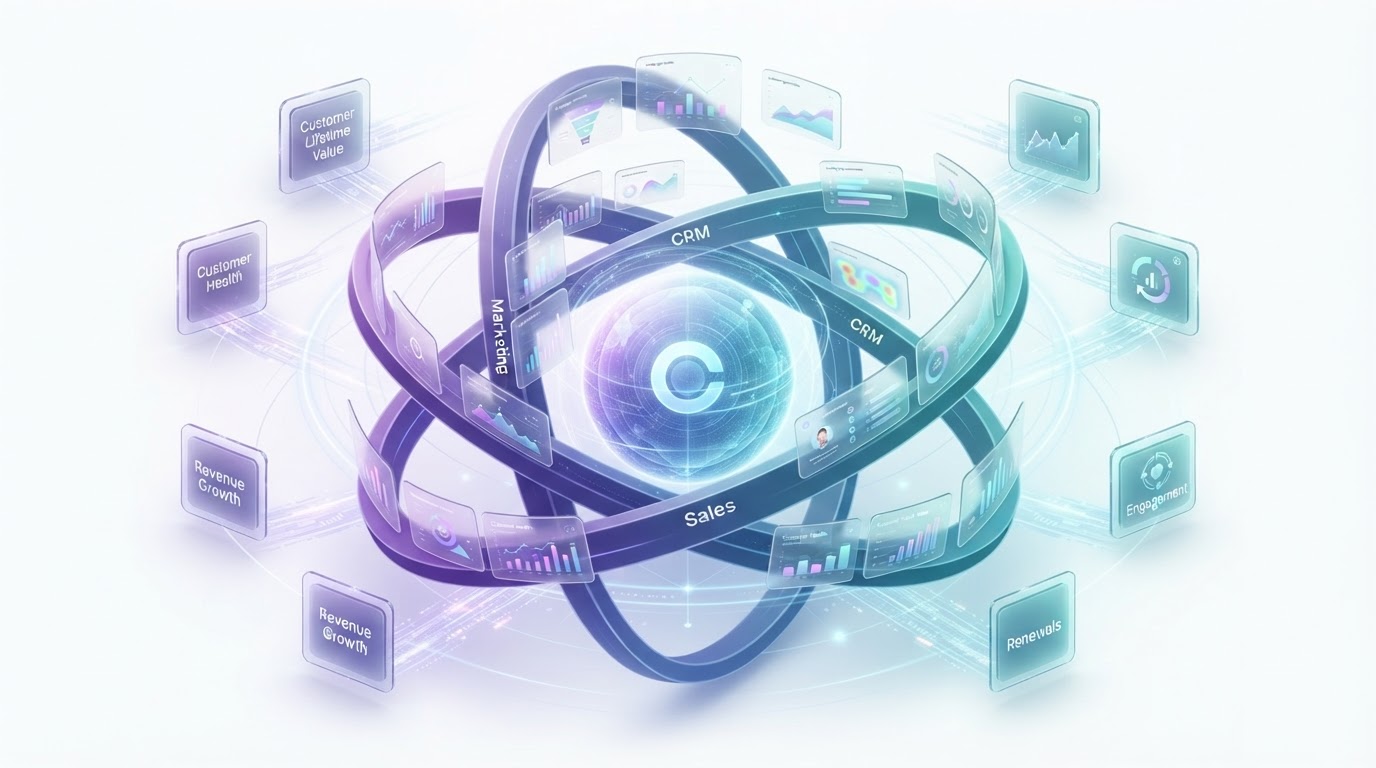
Modern business environments increasingly demand unified data structures where sales, operations, and finance communicate seamlessly. This is why many contemporary platforms integrate CRM and ERP capabilities into a single ecosystem.
The goal is not to collect tools — it is to reduce fragmentation.
Making the Right Decision
Instead of asking whether you need ERP or CRM, a more strategic question is: where does your business currently experience the greatest structural tension?
If customer acquisition and sales visibility are your main constraints, CRM deserves priority.
If operational coordination, financial clarity, or scaling discipline are limiting growth, ERP becomes critical.
Ultimately, sustainable businesses require both revenue optimization and operational integration. Growth without structure creates instability. Structure without growth limits potential.
Conclusion
ERP and CRM are not competing solutions. They address different layers of organizational maturity.
CRM fuels expansion by strengthening customer relationships and sales predictability. ERP stabilizes expansion by integrating processes, finances, and internal operations.
Businesses that understand this distinction early build stronger foundations. They scale not only faster — but with greater clarity, profitability, and resilience.
.jpg)
.jpg)