
Every business reflects the people who lead it. Strategy, culture, risk tolerance, hiring style, and even how fast a company grows are often influenced by the personality patterns of its founders and executives.
In leadership theory and symbolic systems such as archetype models, personalities are grouped into recurring patterns that describe how individuals approach power, creativity, discipline, expansion, and responsibility. One such framework is the 22-archetype system, sometimes associated with numerological or symbolic leadership analysis.
In this article, we explore what the 22 archetypes represent in a business context, how different leadership styles influence company evolution, where growth or friction may appear, and how modern ERP platforms increasingly help organizations balance visionary leadership with operational stability.
What Are Leadership Archetypes?
Leadership archetypes are recurring personality patterns that describe how individuals tend to think, decide, and act in positions of authority. They are not job titles or skills. Instead, they reflect motivations, instincts, and long-term tendencies.
Some leaders are natural builders, focused on systems and structure. Others are explorers who push companies into new markets. Some specialize in protecting stability, while others thrive in disruption and reinvention.
The 22-archetype framework expands this idea into a broader spectrum of leadership energies—each associated with a particular way of guiding people, allocating resources, and reacting to uncertainty.
Why Founders Care About Archetype Models
Entrepreneurs operate under constant pressure: cash flow management, hiring decisions, competitive threats, regulatory demands, and rapid market changes. Archetype frameworks give leaders a way to reflect on their natural tendencies.
Understanding one’s archetype can help explain blind spots. A visionary leader might over-invest in innovation while neglecting internal processes. A stabilizer may build reliable systems but hesitate to pursue aggressive expansion.
In growing organizations, these patterns become even more visible. Leadership style affects whether companies centralize decisions, automate operations early, expand internationally, or diversify product lines.
The 22 Archetypes in a Business Context
Below is a business-focused interpretation of the 22 archetypes and how each might appear inside an organization.
- The Pioneer – Launches new ventures, embraces uncertainty, pushes markets forward.
- The Strategist – Plans long-term moves, analyzes systems, builds scalable models.
- The Builder – Designs infrastructure, processes, and operational frameworks.
- The Diplomat – Manages partnerships, negotiations, and stakeholder relations.
- The Reformer – Drives transformation, restructures teams, modernizes operations.
- The Guardian – Protects stability, compliance, finances, and governance.
- The Innovator – Experiments constantly, develops new products and services.
- The Operator – Executes plans, optimizes workflows, ensures delivery.
- The Visionary – Sets bold direction, inspires teams, defines future markets.
- The Organizer – Builds departments, reporting structures, and accountability.
- The Mentor – Develops talent, builds leadership pipelines, strengthens culture.
- The Financier – Focuses on margins, capital allocation, investor relations.
- The Analyst – Measures performance, evaluates data, forecasts scenarios.
- The Negotiator – Closes deals, manages suppliers, secures contracts.
- The Brand Architect – Shapes market perception, messaging, and positioning.
- The Systems Thinker – Connects departments, integrates tools, designs ERP usage.
- The Crisis Manager – Steps in during turbulence, stabilizes cash flow and morale.
- The Expansionist – Opens new markets, launches branches, pursues acquisitions.
- The Optimizer – Eliminates waste, improves productivity, automates operations.
- The Cultural Builder – Defines values, rituals, and employee experience.
- The Risk Taker – Invests aggressively, bets on timing, embraces disruption.
- The Steward – Preserves legacy, sustainability, and long-term resilience.
How Archetypes Influence Company Growth
A company led primarily by innovators and pioneers often grows quickly in new markets but may struggle with internal discipline. In contrast, organizations dominated by guardians and operators tend to scale more cautiously, focusing on reliability and compliance.
High-performing businesses usually balance multiple archetypes at the executive level. Visionary founders partner with financially minded CFOs. Expansion-driven CEOs rely on systems thinkers to implement ERP platforms and automation.
When leadership styles clash without awareness, friction appears. Product teams may race ahead while finance blocks investment. Operations teams may demand process discipline while sales pushes for flexibility.
Archetypes and ERP Strategy
Leadership archetypes strongly influence how companies adopt ERP systems.
Innovators and expansionists often push for rapid deployment of new modules—AI automation, forecasting tools, customer analytics, and workflow engines. Guardians and financiers focus on audit trails, financial controls, and compliance reporting.
Modern ERP platforms allow both approaches to coexist. Custom dashboards, permission systems, and modular rollouts let organizations satisfy visionary leaders without sacrificing governance.
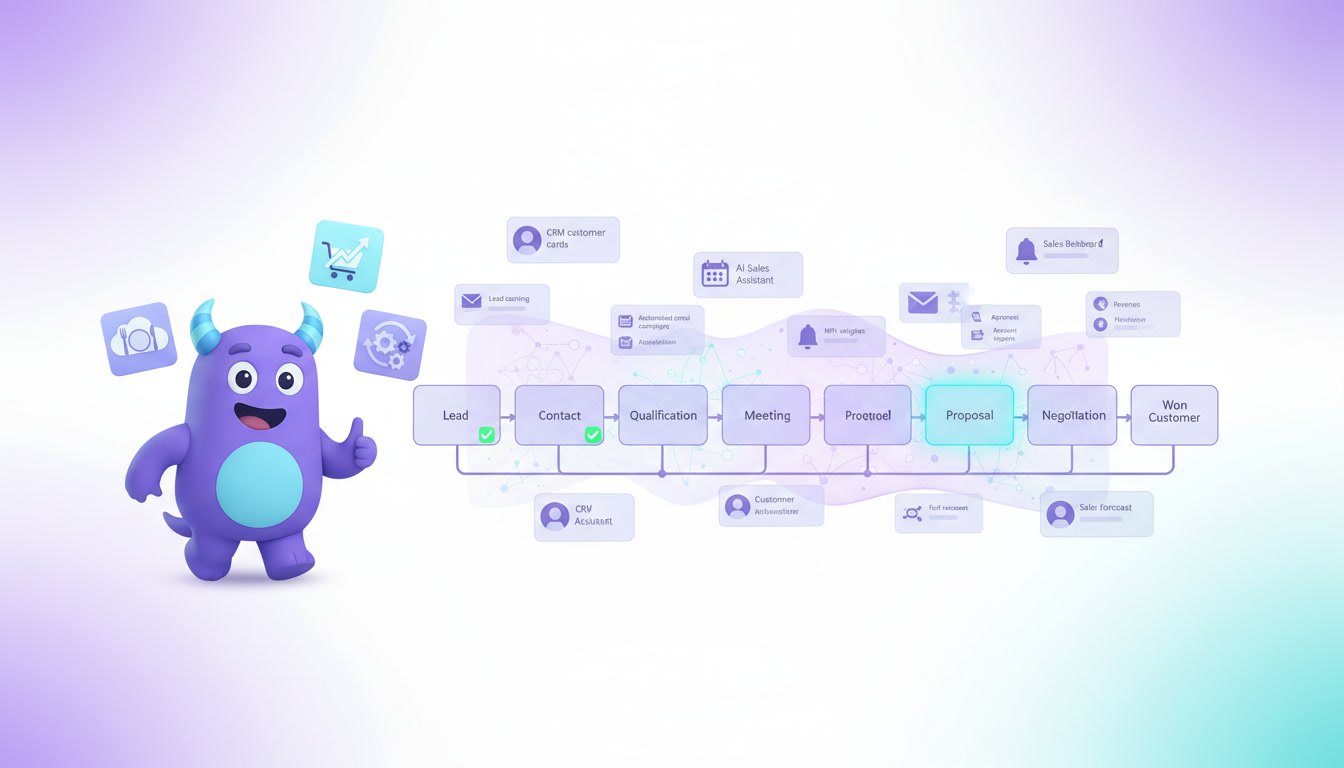
In platforms like Lua CRM, teams can tailor automation flows, reporting layers, and data structures to match leadership style—whether the priority is experimentation, control, or international scaling.
Using Archetypes in Leadership Teams
Archetype models are most powerful when applied across leadership groups rather than individuals alone.
Boards and executive teams sometimes map their dominant styles to reveal gaps. If no one represents operational discipline, execution suffers. If no one pushes innovation, stagnation follows.
This kind of analysis encourages balanced hiring—bringing in COOs, CFOs, or CTOs whose natural tendencies complement the founder.
Limits of Archetype Frameworks
While archetypes offer insight, they are not predictive formulas. Markets, regulation, competition, and customer behavior still determine outcomes.
The healthiest approach treats archetypes as reflection tools rather than rigid labels. Leaders evolve. Companies mature. Roles shift as organizations scale.
ERP systems remain the backbone of disciplined growth—providing financial visibility, operational coordination, and performance measurement regardless of leadership style.
Final Thoughts
The 22 archetypes in business leadership highlight how deeply founder personalities shape company trajectories. Vision, caution, discipline, creativity, and resilience all play roles in determining whether organizations expand sustainably or struggle with internal friction.
When symbolic leadership frameworks meet data-driven ERP platforms, companies gain the best of both worlds: intuitive guidance combined with real-time operational intelligence.
Understanding who leads—and how—may be one of the most powerful strategic tools a growing business can use.
.jpg)

.jpg)