
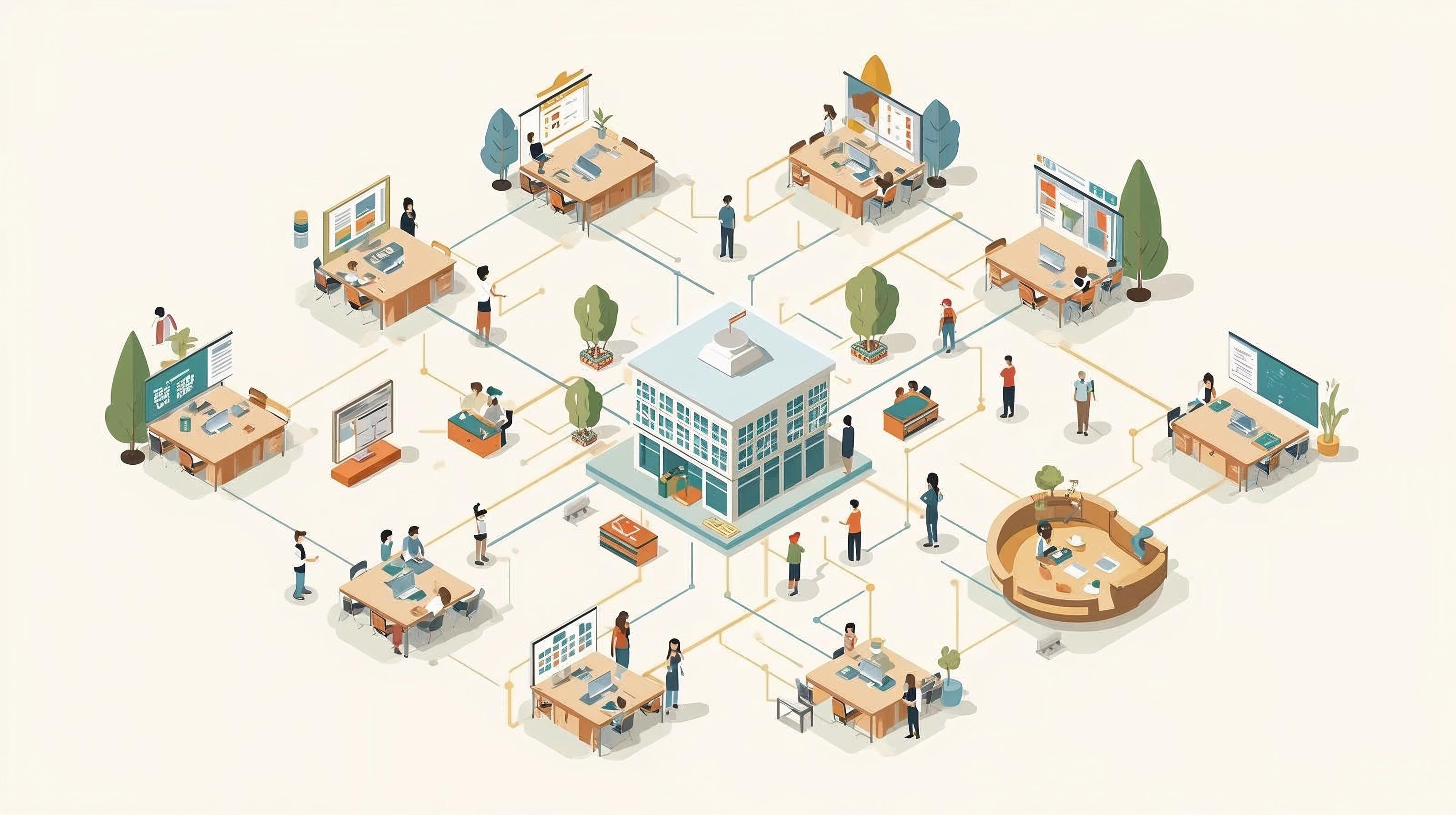
Okuw we bilim merkezleri gurluş, tertipnama we utgaşdyrmak esasynda döredilendir. Kurslar, mugallymlar, talyplar, okuw materiallary we administrasiýa sazlaşykly işlemeli. Bilim işi kiçi bolanda, bu utgaşdyrmak köplenç gollanma we resmi däl usulda amala aşyrylýar. Toparlar gündelik işleri alyp barmak üçin tejribä, göni aragatnaşyga we ýönekeý gurallara bil baglaýarlar.
Okuw ýa-da bilim merkezi giňelýänçe, bu resmi däl usullar bozulyp başlaýar. Ösüş has köp talyby, has köp programmany, has köp mugallymy we has köp amaly ädimleri girizýär. Bir wagtlar çeýe duýulan zat haýal, bulaşyk we dolandyrmak kyn ýaly duýulýar. Ösüş dowam edýär, ýöne netijelilik peselýär.
Haýallaşma seýrek ýagdaýda bir gijede bolup geçýär. Ulgamlar üýtgewsiz galýarka, çylşyrymlylyk ýokarlanýarka, kem-kemden ösýär.
Amaly çylşyrymlylyk gurluşdan has çalt ösýär
Her täze kurs ýa-da okuw topary amaly talaplary köpeldýär. Hasaba alyş, tertipnama, mugallymyň elýeterliligi, synp otagyny paýlamak, aragatnaşyk we tölegler hemişe sazlaşykly bolmaly. Bu çäreler hasaplaýyş tablitsalary, e-poçtalar we habarlaşma programmalary arkaly dolandyrylanda, utgaşdyrmak gowşak bolýar.
Kiçijik üýtgeşmeler uly bozulmalary döredýär. Tertipnama düzedişi ähli mugallymlara ýetip bilmez. Täzelenen materiallar wagtynda paýlanyp bilinmez. Talyplar yzygiderli bolmadyk maglumat alýarlar. Işgärler bilim hilini gowulandyrmagyň deregine meseleleri düzetmek üçin köp wagt sarp edýärler.
Esasy mesele ösüşiň özi däl, eýsem şol ösüşi goldamaga niýetlenen ulgamyň ýoklugydyr.
Gollanma tertipnama çäklendirme bolýar
Tertipnama bilimde iň köp zähmet talap edýän amaly wezipeleriň biridir. Mugallymlary, synp otaglaryny, wagt aralyklaryny we talyplar toparlaryny utgaşdyrmak takyklygy talap edýär. Tertipnama gollanma arkaly dolandyrylanda, hatda ownuk üýtgeşmeler hem birnäçe dowam etdirmegi we tassyklamagy talap edýär.
Göwrüm ýokarlanýança, administratorlar hemişelik düzedişlerden ýaňa özüni ýitirýärler. Mugallymlar täzelenmelerden üzňe duýýarlar. Tertipnamalar düşnükli aragatnaşyksyz üýtgände, talyplar ynamyny ýitirýärler. Wagtyň geçmegi bilen tertipnamanyň netijesizligi tutuş guramany haýallaşdyrýar.
Gollanma tertipnama giňelmegi bilen ölçelmeýär.
Bölünen gurallar görünmegi peseldýär
Köp okuw merkezleri amallary dolandyrmak üçin birnäçe aýry gurallara bil baglaýarlar. Bir ulgam talyplaryň ýazgylaryny, beýleki tölegleri, beýleki içerki aragatnaşygy we beýleki okuw mazmunyny dolandyryp biler. Her bir gural belli bir meseläni çözýän hem bolsa, hiç biri doly amaly şekili bermeýär.
Liderler öndürijilige hakyky wagtda düşünmekde kynçylyk çekýärler. Haýsy programmalaryň has gowy işleýändigi, haýsy düşmeleriň bolýandygy ýa-da haýsy mugallymlaryň aşa ýüklenýändigi ýaly soraglar gollanma seljermesini talap edýär. Kararlar gijikdirilýär ýa-da doly bolmadyk maglumata esaslanýar.
Görünmezden giňelmek strategiki däl-de, töwekgelçilikli bolýar.
Administratiw ýük ünsi bilimden daşlaşdyrýar
Amallar has çylşyrymly bolýança, administratiw iş ýokarlanýar. Işgärler ýazgylary täzelemek, ýatlatmalar ibermek, maglumatlary ylalaşdyrmak we utgaşdyrma meselelerini çözmek üçin has köp wagt sarp edýärler. Bu kursyň hilini gowulandyrmak we talyplary goldamak üçin elýeterli wagty azaldýar.
Mugallymlar goldawsyz duýup bilerler, administratorlar dartgynly duýup bilerler we talyplar tejribelerinde yzygiderli bolmadyk zatlary görýärler. Gurama ösmegini dowam etdirýär, ýöne okuw gurşawy ejir çekýär.
Amaly netijesizlik bilim netijelerine gönüden-göni täsir edýär.
Merkezleşdirilen ulgamlar durnukly giňelmä mümkinçilik berýär
Haýallamazdan giňeltmek üçin okuw we bilim merkezlerine merkezleşdirilen amaly ulgamlar gerek. Talyplary dolandyrmak, tertipnama, mugallymlary utgaşdyrmak, tölegler we aragatnaşyk birleşdirilen gurşawda işlemeli.
Gurluşly ulgam maglumatyň yzygiderli akmagyny, wezipeleriň anyk bellenilmegini we täzelenmeleriň hakyky wagtda görünmegini üpjün edýär. Bu gollanma utgaşdyrmagy azaldýar we toparlara ýokary hilli bilim bermäge üns bermäge mümkinçilik berýär.
Dogry amaly esas bilen ösüş stresli däl-de, dolandyryp bolýar.
Netije
Okuw we bilim merkezleri giňelýänçe haýallaşýar, sebäbi gollanma prosesler we bölünen gurallar çylşyrymlylygy goldap bilmeýär. Ösüş utgaşdyrmakda, görünmekde we amaly gurluşda ejizlikleri ýüze çykarýar.
Merkezleşdirilen ulgamlara ir maýa goýýan guramalar toparlaryny ýüklemezden programmalary giňeldip, has köp talyby hasaba alyp we hilini saklap bilerler. Ulgamlaşdyrmagy gijikdirýänler köplenç haýal ösüşi, kanagatlanmagyň peselmegini we amaly stresiň ýokarlanmagyny başdan geçirýärler.
Bilimde durnukly giňelmek diňe bir islege däl, eýsem amallary düşnüklilik, gurluş we gözegçilik bilen dolandyrmak ukybyna baglydyr.
.jpg)

.jpg)