
Servicevirksomheder planlægger ofte projekter med selvtillid. Teamet er erfarent, kunden er enig i omfanget, og tidsplanen ser realistisk ud. Men så snart leveringen begynder, rykker deadlines sig. Små forsinkelser opstår, overleveringer tager længere tid end forventet, og den endelige færdiggørelse bliver udskudt igen og igen. Dette sker selv i organisationer med dygtige teams og tilfredse kunder.
Når projekter bliver forsinkede, er det let at give arbejdsbyrden skylden eller antage, at teamet har undervurderet indsatsen. I virkeligheden er de fleste forsinkelser strukturelle. De stammer fra, hvordan servicearbejdet er organiseret, koordineret og kommunikeret. Dygtige teams kører stadig fast, når systemet omkring dem skaber friktion.
Denne artikel forklarer de mest almindelige årsager til, at serviceprojekter tager længere tid end planlagt, og hvilke ændringer der kan reducere forsinkelser uden at øge presset på teamet.
Serviceprojekter indeholder skjult arbejde
Projektplaner inkluderer normalt de synlige dele af leverancen: møder, opgaver, milepæle og resultater. Det, der ofte mangler, er det skjulte arbejde, der understøtter leverancen. Dette omfatter afklaring af krav, indsamling af input, at vente på godkendelser, at løse misforståelser og at opdatere kunder.
Skjult arbejde er ikke valgfrit. Det er en del af ethvert serviceprojekt. Når der ikke tages højde for det, bliver tidsplaner som standard optimistiske. Teamet kan måske stadig levere, men tidsplanen kan ikke holde under reelle forhold.
En praktisk projekttidsplan inkluderer plads til koordinering, beslutningstagning og omarbejde, fordi disse elementer altid eksisterer i serviceleverancer.
Forsinkelser mangedobles gennem afhængigheder
Serviceprojekter er stærkt afhængige af rækkefølgen. Én opgave kan ikke starte, før en anden er afsluttet. En designer venter på indhold, en udvikler venter på godkendelse, et driftsteam venter på kravspecifikationer, og fakturering venter på bekræftelse af færdiggørelse.
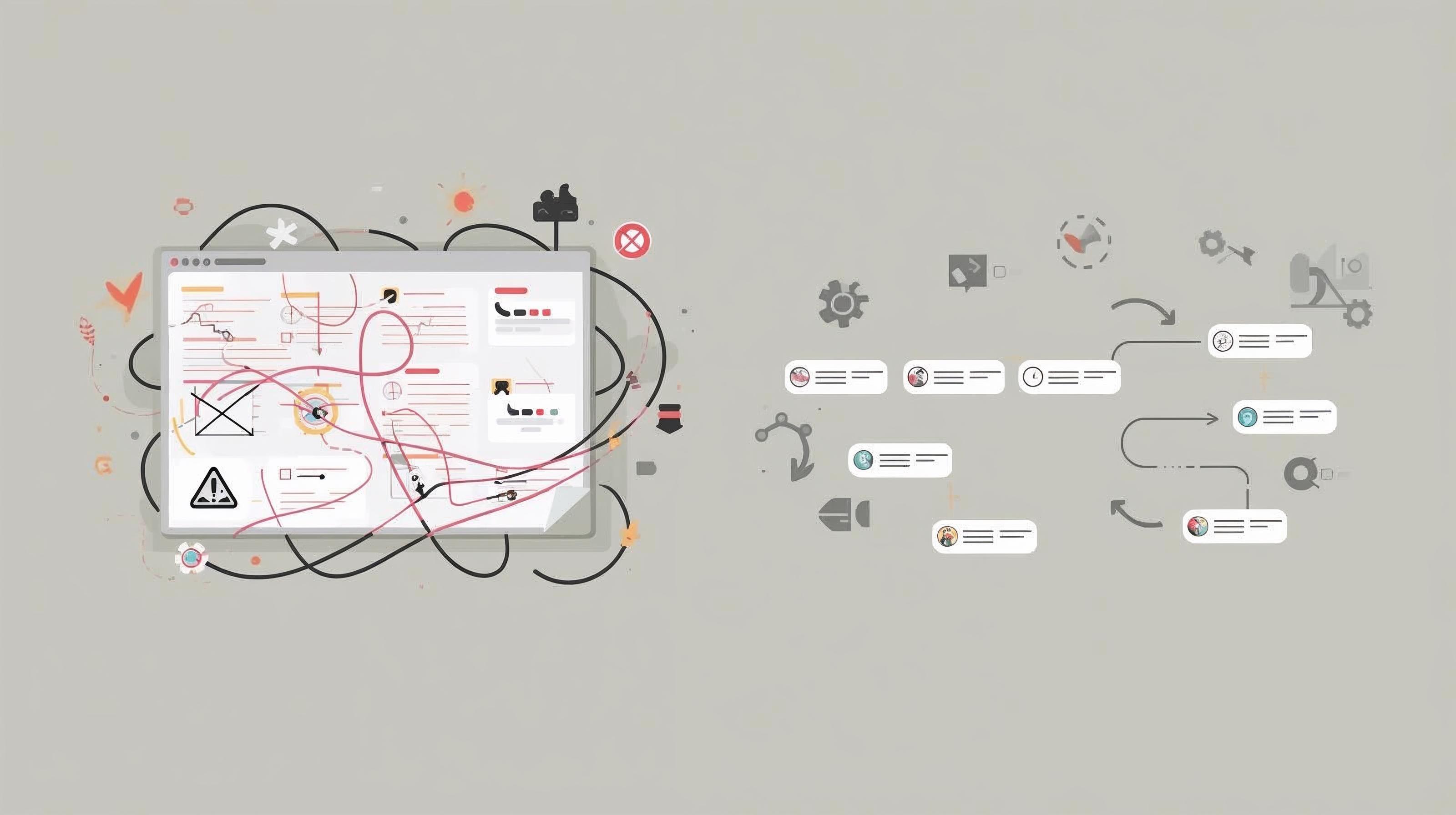
Når afhængigheder ikke er synlige, opdager teams dem for sent. Arbejdet går i stå uden klare næste skridt. Folk udfylder hullerne med urelaterede opgaver, og momentummet brydes. Selv korte pauser får tidsplaner til at skride, især når flere afhængigheder hober sig op.
Håndtering af afhængigheder kræver synlighed omkring, hvad der blokerer for fremskridt, og hvem der skal handle som den næste. Uden det mangedobles forsinkelserne i det stille.
Ejerskab er ofte uklart under overleveringer
Servicearbejde indebærer hyppige overleveringer. Salg overleverer til leveranceteamet, leveranceteamet overleverer mellem roller, og projekter flytter sig ofte mellem afdelinger. Overleveringer er det tidspunkt, hvor projekter oftest sænker farten.
Hovedårsagen er uklart ejerskab. En opgave kan være "delt", men ingen er klart ansvarlig for at drive den videre. Folk antager, at en anden vil tage sig af det næste skridt. Ledere træder til for at fjerne blokeringer manuelt, hvilket skaber afhængighed og forsinker eksekveringen yderligere.
Klart ejerskab betyder ikke, at én person gør alt. Det betyder, at hvert næste skridt har en synlig ejer, som er ansvarlig for fremdrift, koordinering eller eskalering.
Kommunikationsomkostninger vokser hurtigere end arbejdsbyrden
I takt med at projekter bliver mere komplekse, stiger kommunikationsomkostningerne. Flere mennesker er involveret, flere opdateringer er nødvendige, og flere beslutninger skal bekræftes. Når kommunikation håndteres uformelt via chats og beskeder, går vigtige detaljer let tabt.
Teams bruger mere tid på at afklare og opdatere end på at levere. Dette er en af de største årsager til, at dygtige teams føler sig travle, men bevæger sig langsomt. Arbejdet er ikke nødvendigvis sværere, men koordineringen bliver tungere.
Struktureret kommunikation reducerer disse omkostninger ved at holde opdateringer, beslutninger og kontekst knyttet til projektet og synlige for hele teamet.
Scope creep sker i det stille
Serviceprojekter udvides ofte over tid. Kunder anmoder om små tilføjelser, teams accepterer "hurtige løsninger", og ekstra arbejde accepteres uformelt. Hver tilføjelse føles lille, men samlet set forlænger de tidsplanen.
Scope creep er især almindeligt, når projektets omfang ikke er klart dokumenteret, eller når ændringsanmodninger ikke har en simpel godkendelsesproces. Teams forsøger at holde kunderne glade, men leverancen bliver langsommere, og rentabiliteten falder.
Et godt system gør projektets omfang synligt og skaber en struktureret måde at godkende ændringer på. Dette beskytter både tidsplaner og marginer.
Manuel sporing gør fremskridt svære at måle
Når projektsporing er manuel, bliver fremskridt subjektive. Opdateringer afhænger af, hvad folk husker at dele. Ledere modtager ufuldstændige oplysninger og kan ikke opdage forsinkelser tidligt.
Dette skaber sene reaktioner. Problemer opdages, når deadlines allerede er i fare. Teams skynder sig derefter, kvaliteten falder, og kunderne føler usikkerhed. Projektet bliver måske stadig færdigt, men det afsluttes senere og med mere stress end nødvendigt.
Sporing i realtid hjælper teams med at se problemer tidligt, justere arbejdsbyrder og holde leverancen forudsigelig.
Sådan reduceres forsinkelser uden at overbelaste teams
Reduktion af forsinkelser starter med synlighed. Teams har brug for et klart overblik over opgaver, deadlines, afhængigheder og ejerskab på ét sted. Når alle ser den samme virkelighed, forbedres koordineringen naturligt.
Standardisering er det næste skridt. Serviceprojekter gentager ofte lignende arbejdsgange. Skabeloner, tjeklister og strukturerede faser reducerer planlægningstiden og forhindrer, at trin overses. Standardisering reducerer også antallet af beslutninger, som teams skal træffe gentagne gange, hvilket fremskynder eksekveringen.
Automatisering tilføjer pålidelighed. Rutinemæssige opfølgninger, påmindelser og overleveringer kan ske automatisk, når betingelserne er opfyldt. Dette reducerer afhængigheden af hukommelse og uformel kommunikation. Automatisering erstatter ikke serviceleverancearbejdet, men det fjerner friktionen omkring det.
Endelig skal styring af projektomfang være enkel. Teams bør have en nem måde at dokumentere ændringer på, godkende tilføjelser og justere tidsplaner på en gennemsigtig måde. Dette forhindrer, at en stille udvidelse bliver til en skjult forsinkelse.
Konklusion
Serviceprojekter tager længere tid end planlagt selv med dygtige teams, fordi forsinkelser normalt stammer fra struktur, ikke indsats. Skjult arbejde, afhængigheder, uklart ejerskab, kommunikationsomkostninger, stille scope creep og manuel sporing skaber friktion, der forsinker leverancen.
Servicevirksomheder forbedrer projekttidsplaner ved at bygge systemer, der gør arbejdet synligt, ejerskabet klart og arbejdsgangene gentagelige. Når projekter styres gennem en sammenhængende struktur i stedet for konstant manuel koordinering, leverer teams hurtigere med mindre stress, og kunderne oplever en mere ensartet service.