
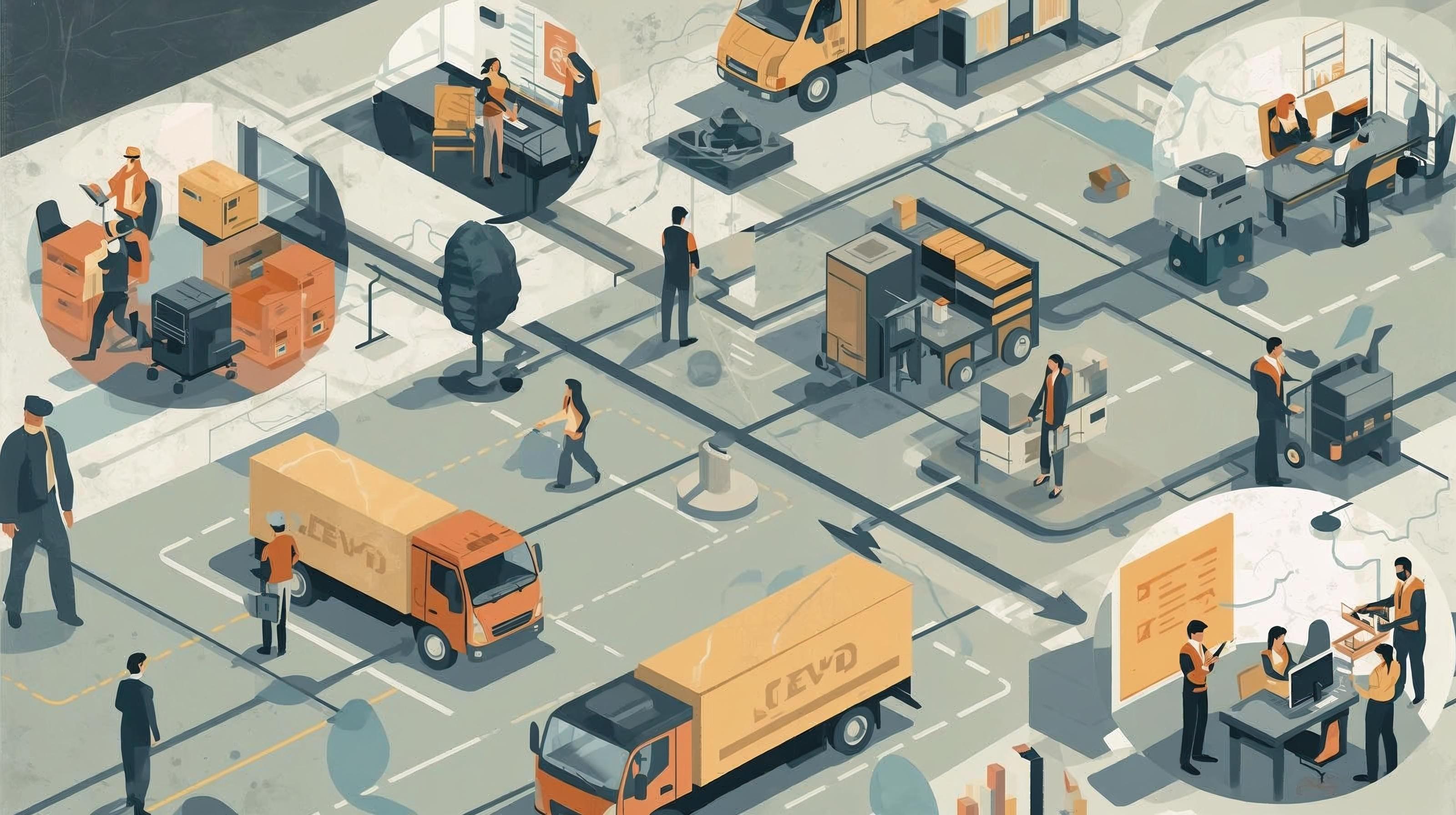
Logistics service companies are built on coordination. Every shipment depends on accurate information, precise timing, and smooth collaboration between teams, partners, and systems. When a logistics business is small, this coordination often happens naturally through direct communication and simple tools. However, as operations scale, the same approaches begin to fail.
Many logistics companies experience rapid growth in clients, routes, shipments, and staff, but their internal coordination does not evolve at the same pace. This gap creates delays, confusion, duplicated work, and rising operational stress. The result is not only inefficiency, but also increased costs, customer dissatisfaction, and reduced profitability.
Understanding why coordination becomes harder with scale is the first step toward fixing it. Most problems do not come from people or effort, but from systems and structure that were never designed for growth.
Coordination Becomes Complex Before Companies Notice
In early stages, logistics teams rely on spreadsheets, messaging apps, emails, and phone calls to manage shipments, drivers, documentation, and billing. This works when volumes are low and everyone knows what is happening. As soon as shipment numbers grow, this informal coordination turns into constant firefighting.
Information starts to live in many places at once. One team updates a spreadsheet, another confirms details by email, while drivers receive instructions through messaging apps. There is no single source of truth. Teams spend more time confirming information than executing work, and small errors quickly turn into costly delays.
The problem is not a lack of effort, but a lack of structure. Coordination requires visibility, consistency, and clear ownership of data and processes. Without these, growth automatically increases chaos.
Disconnected Systems Create Operational Blind Spots
As logistics companies scale, they often add new software tools to solve immediate problems. One tool for dispatching, another for invoicing, another for document storage, and yet another for customer communication. While each tool may work well on its own, together they create fragmentation.
When systems are not connected, teams lose visibility across the full operation. Dispatch does not see billing status. Finance does not have real-time shipment data. Customer support lacks access to operational updates. Managers struggle to get accurate answers to simple questions like where delays occur or which routes are most profitable.
These blind spots make coordination reactive instead of proactive. Problems are discovered after customers complain, rather than prevented through visibility and planning.
Growth Multiplies Dependencies Between Teams
In logistics, no team works in isolation. Operations depend on sales forecasts. Finance depends on confirmed deliveries. Customer support depends on accurate shipment status. When volume increases, the number of dependencies grows exponentially.
Without clearly defined workflows and responsibilities, teams start waiting on each other. Tasks fall between roles. Important steps are skipped because everyone assumes someone else is handling them. Coordination slows not because teams are incapable, but because processes are unclear.
This creates internal friction. Teams feel busy all day, yet progress feels slow. Managers respond by adding more staff, which often increases complexity instead of solving the root problem.
Manual Coordination Does Not Scale
Many logistics companies rely heavily on manual coordination: phone calls to confirm deliveries, emails to update clients, and human checks to verify documents. While this gives a sense of control early on, it becomes unsustainable at scale.
Manual coordination introduces delays and human error. Important updates are missed, documents are incomplete, and follow-ups are forgotten. Employees spend their time tracking information instead of managing operations.
As a result, service quality becomes inconsistent. Some shipments are handled perfectly, while others suffer from avoidable mistakes. This inconsistency damages trust with clients and partners.
The Role of Centralized Systems in Scalable Coordination
Sustainable coordination at scale requires centralization. This does not mean removing flexibility, but creating a shared operational backbone where all teams work with the same data, processes, and visibility.
A centralized system allows logistics companies to manage shipments, tasks, documentation, billing, and communication in one environment. It ensures that updates flow automatically between teams and that everyone sees the same operational reality.
With the right system in place, coordination becomes structured rather than improvised. Teams spend less time searching for information and more time executing work. Managers gain visibility into bottlenecks and can make informed decisions based on real data.
Conclusion
Logistics service companies do not struggle with coordination because they lack skilled teams. They struggle because growth exposes the limits of manual processes and disconnected tools. As operations scale, coordination must evolve from informal communication to structured systems.
Companies that recognize this early can build a strong operational foundation, maintain service quality, and grow without chaos. Those that delay addressing coordination challenges often face rising costs, operational stress, and lost customer trust.
Scaling logistics operations successfully requires more than effort. It requires systems designed to support coordination, visibility, and control at every stage of growth.
.jpg)

.jpg)