
.jpg)
At the beginning of a business, chaos often feels normal. Founders manage everything themselves, teams communicate informally, and processes are flexible. This speed and adaptability can be an advantage in the early stages.
However, as the business grows, what once felt like flexibility starts to become confusion. Tasks get missed, responsibilities become unclear, and communication breaks down. What used to work for a small team no longer works at scale.
This is the moment when many businesses realize that growth without structure leads to chaos.
The good news is that chaos is not permanent. With the right approach, businesses can move from disorder to control by organizing their processes effectively.
Why Business Processes Matter
Business processes are the foundation of how work gets done. They define the steps required to complete tasks, who is responsible, and how different parts of the company interact.
Without clear processes, employees rely on assumptions and improvisation. This leads to inconsistencies, delays, and mistakes.
When processes are clearly defined, work becomes predictable and easier to manage. Teams know what to do, when to do it, and how to do it.
The Signs Your Business Is in Chaos
Many business owners do not realize they have a process problem until the symptoms become obvious.
Common signs of chaos include missed deadlines, lost leads, repeated mistakes, unclear responsibilities, and constant firefighting.
If your team is always reacting instead of following a structured workflow, it is a clear indication that your processes need to be organized.
Step 1: Identify Your Core Processes
The first step toward control is understanding how your business actually operates. Identify the key processes that drive your company, such as lead management, sales, customer onboarding, and support.
Break each process down into individual steps. This helps you see where tasks are unclear, duplicated, or inefficient.
Step 2: Standardize How Work Is Done
Once you understand your processes, the next step is to standardize them. Define clear steps, responsibilities, and expected outcomes.
Standardization ensures that tasks are performed consistently, regardless of who is responsible.
This reduces confusion and improves overall efficiency.
Step 3: Eliminate Unnecessary Steps
Many processes become complicated over time as businesses grow. Unnecessary steps, approvals, or manual tasks can slow down operations.
Simplifying processes helps teams work faster and reduces friction. Focus only on the steps that add value.
Step 4: Introduce Automation
Once processes are clearly defined, they can be automated. Automation allows repetitive tasks to be handled by software instead of people.
For example, follow-up reminders, task assignments, and notifications can be automated based on specific triggers.
Automation not only saves time but also ensures that tasks are completed without being forgotten.
Step 5: Use Systems to Maintain Control
Processes alone are not enough. Businesses need systems to manage and execute these processes effectively.
This is where tools like CRM systems become essential. They provide a centralized platform where processes can be tracked, managed, and optimized.
Instead of relying on memory or scattered tools, teams can operate within a structured environment.
How Lua CRM Helps Bring Order to Chaos
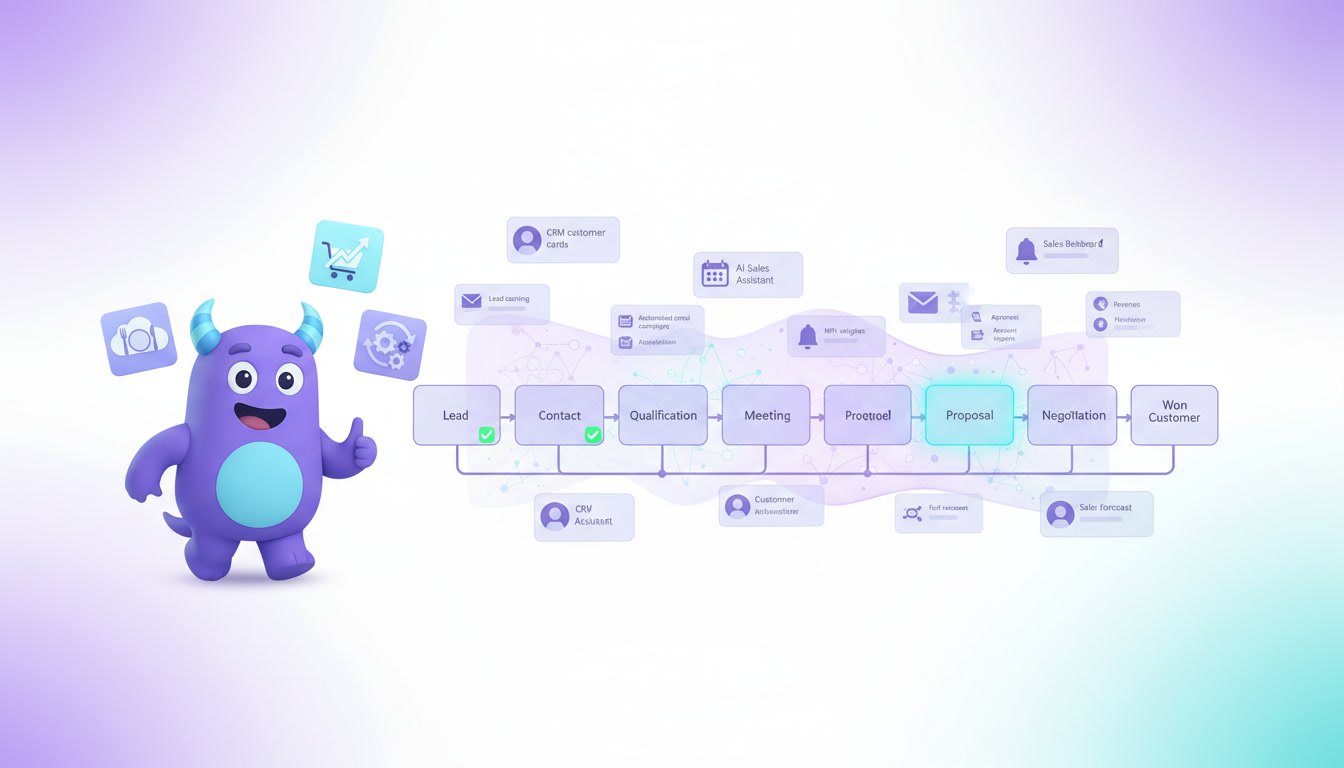
Lua CRM is designed to help businesses organize their processes and move from chaos to control. The platform allows companies to define workflows, automate tasks, and manage customer relationships in one place.
With Lua CRM, teams can track leads, manage sales pipelines, assign tasks, and monitor performance through a structured system.
This eliminates confusion and ensures that everyone is aligned with the same processes.
By combining workflow automation with CRM functionality, Lua CRM helps businesses operate more efficiently and scale without losing control.
Conclusion
Chaos is a natural part of growth, but it should not be permanent. Businesses that fail to organize their processes often struggle as they scale.
By identifying key workflows, standardizing tasks, simplifying operations, and introducing automation, companies can transform chaos into control.
With the right systems in place, businesses can operate more efficiently, improve team performance, and create a strong foundation for growth.
In the end, control does not come from working harder — it comes from building better processes.
.jpg)

.jpg)