.png)
As businesses grow, operations become increasingly difficult to manage manually. Teams spend hours handling repetitive tasks, coordinating workflows, following up with leads, updating spreadsheets, and managing communication across multiple systems.
At first, these manual processes may seem manageable. But over time, they create operational chaos, reduce productivity, and slow down growth.
This is why business automation has become one of the most important investments for modern companies.
Business automation allows companies to replace repetitive manual work with structured systems and automated workflows. Instead of relying on constant coordination and human effort, businesses can operate through scalable processes that improve efficiency and consistency.
What Is Business Automation?
Business automation is the process of using software and technology to automate repetitive tasks, workflows, and operational processes.
Instead of manually managing every step, businesses create automated systems that execute tasks based on predefined workflows and conditions.
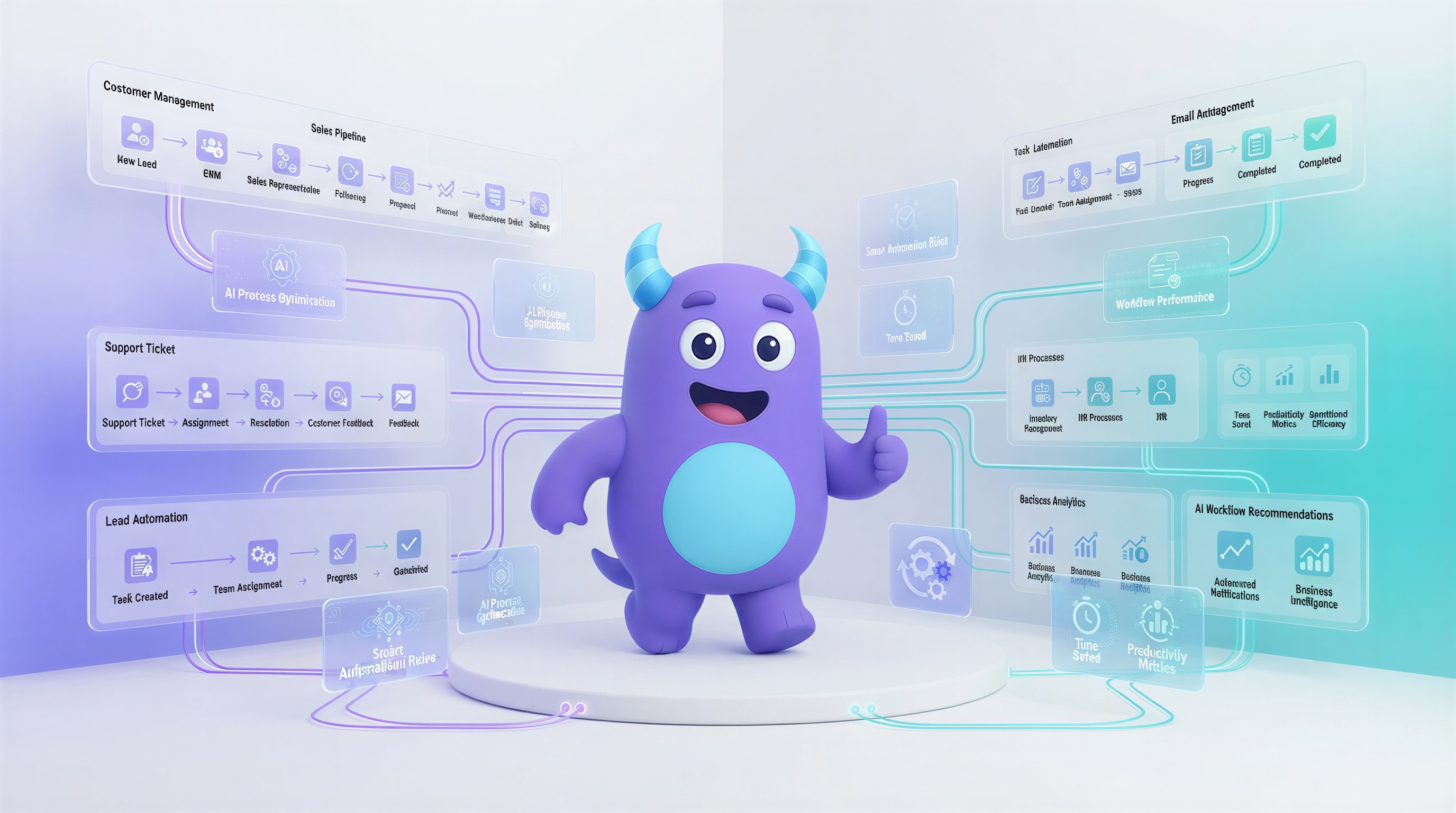
Business automation can include:
- Lead and customer management
- Sales process automation
- Task and workflow management
- Email and communication automation
- Reporting and analytics
- Financial and operational workflows
- Notifications and reminders
The goal of business automation is not simply to reduce workload — it is to create a more organized, scalable, and efficient business operation.
Why Businesses Need Automation
Many companies continue to rely on spreadsheets, messaging apps, and manual coordination even as operations become more complex.
This creates major inefficiencies:
- Tasks are forgotten
- Leads are not followed up properly
- Teams waste time on repetitive work
- Communication becomes inconsistent
- Processes depend too heavily on individuals
As the business grows, these problems become more severe.
Business automation solves these issues by replacing manual coordination with structured systems that operate consistently.
This allows businesses to scale without creating operational chaos.
Benefits of Business Automation
Business automation provides significant advantages for companies that want to improve efficiency and growth.
- Reduce repetitive manual work
- Increase operational efficiency
- Improve workflow consistency
- Reduce human error
- Increase productivity
- Improve customer communication
- Scale operations more efficiently
- Save time and operational costs
Automation allows teams to focus on strategic work instead of repetitive coordination.
How Business Automation Improves Sales
One of the most valuable areas for automation is sales management.
Without automation, sales teams often struggle with missed follow-ups, inconsistent communication, and disorganized pipelines.
Business automation helps companies create structured sales workflows where:
- Leads are captured automatically
- Tasks are assigned instantly
- Follow-ups are scheduled automatically
- Notifications are triggered in real time
- Sales pipelines update automatically
This creates a more predictable and scalable sales process.
If you want to improve your sales workflow, read our Sales Process Guide.
Workflow Automation and Business Systems
Workflow automation is one of the core parts of business automation.
Instead of employees manually managing operational steps, automated workflows move tasks and processes through predefined stages.
For example:
- New leads can be assigned automatically
- Tasks can be created instantly
- Approvals can move through workflows automatically
- Reports can be generated in real time
This creates operational consistency and reduces dependency on manual coordination.
If you want to learn more about workflow systems, explore our Workflow Automation Guide.
Business Automation for Small Businesses
Many small businesses assume automation is only for large enterprises, but small and medium-sized companies often benefit the most.
Smaller teams usually operate with limited resources, making efficiency extremely important.
Business automation helps small businesses scale operations without constantly increasing workload or hiring additional staff for repetitive tasks.
This allows companies to grow more sustainably and operate more professionally.
CRM and Business Automation
Modern business automation is closely connected to CRM systems.
Without a CRM, customer data, tasks, communication, and workflows become scattered across different tools and platforms.
A CRM system centralizes these processes and creates the foundation for automation.
CRM software can automate:
- Lead management
- Customer communication
- Task assignment
- Workflow stages
- Sales processes
- Notifications and reminders
This creates a more scalable and organized business structure.
If you want to understand how CRM systems support automation, read our CRM System Guide.
Why Choose Lua CRM for Business Automation?
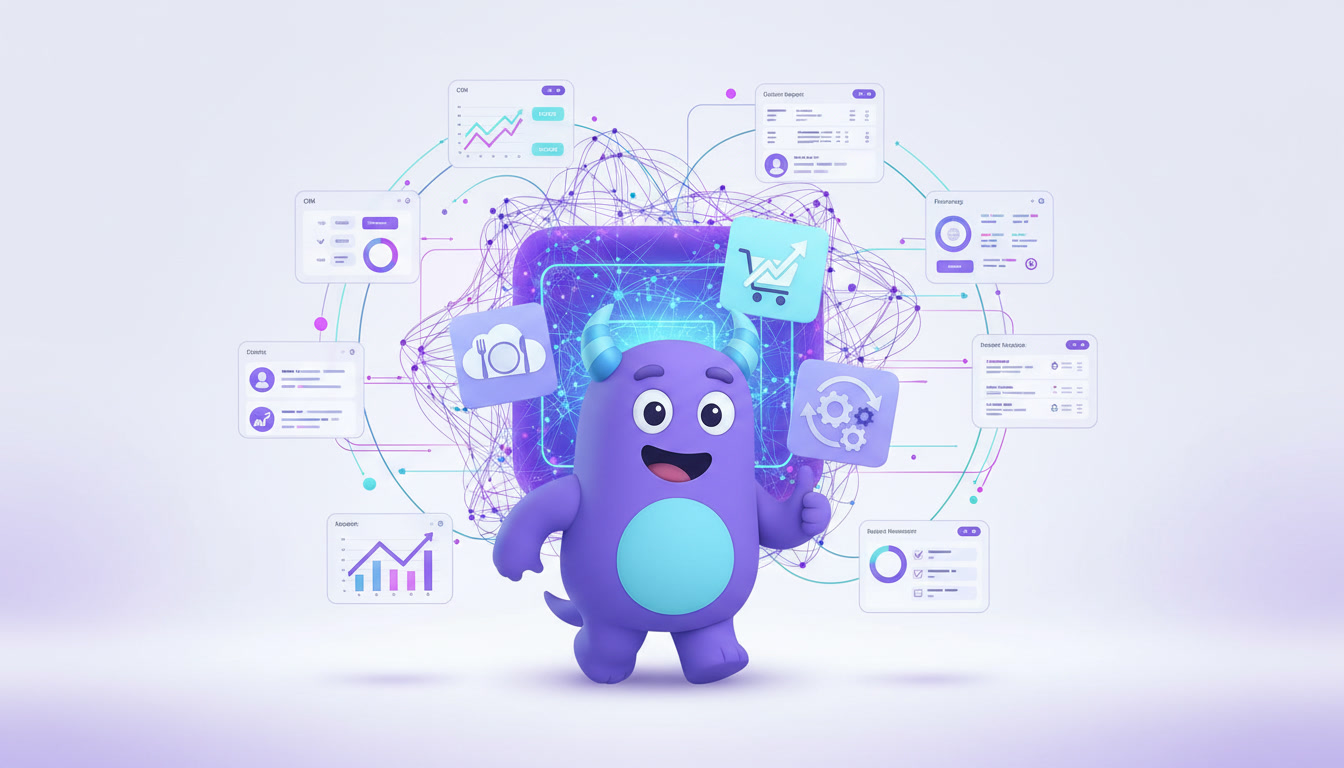
Lua CRM is an all-in-one business automation and CRM platform designed to help businesses organize operations, automate workflows, and improve productivity.
Unlike traditional systems that require multiple disconnected tools, Lua CRM combines CRM, workflow automation, task management, analytics, and operational management into one centralized platform.
- Business automation workflows
- CRM and customer management
- Task and team management
- Workflow automation
- Sales and lead tracking
- Analytics and reporting
- Flexible business logic
- Modern scalable platform
This allows businesses to create structured systems that support long-term growth and operational efficiency.
What Happens Without Business Automation?
Without automation, businesses often experience operational bottlenecks as they grow.
Teams become overwhelmed with repetitive work, communication slows down, and processes become inconsistent.
Over time, this creates operational chaos that limits scalability and growth.
Business automation solves these problems by creating systems that operate consistently and efficiently.
Frequently Asked Questions
What is business automation?
Business automation is the use of software and systems to automate repetitive tasks and workflows.
Why is business automation important?
Business automation improves efficiency, reduces manual work, and helps businesses scale more effectively.
What processes can be automated?
Businesses can automate sales workflows, lead management, communication, reporting, task management, and operational processes.
What tools are used for business automation?
CRM and workflow automation platforms such as Lua CRM are commonly used for business automation.
Start Automating Your Business with Lua CRM
If you want to automate business workflows, improve operational efficiency, and organize your company through structured systems, Lua CRM provides a flexible all-in-one business automation platform designed for growing businesses.
Frequently Asked Questions
What is business automation?
Business automation is the use of software and systems to automate repetitive tasks and workflows.
Why is business automation important?
Business automation improves efficiency, reduces manual work, and helps businesses scale more effectively.
What processes can businesses automate?
Businesses can automate sales workflows, communication, reporting, lead management, and operational processes.
What tools are used for business automation?
CRM and workflow automation platforms such as Lua CRM are commonly used for business automation.
.jpg)