When businesses first hear about ERP systems, the concept often feels abstract. The term “Enterprise Resource Planning” sounds complex, technical, and usually associated with large corporations. As a result, many founders and managers struggle to answer a very practical question: what real problems does an ERP system actually solve inside a growing company?
This uncertainty is understandable. ERP is frequently marketed as a comprehensive solution, but without context, it can feel like an oversized tool for small or mid-sized service businesses. The assumption is often that ERP becomes relevant only after a company reaches a certain size.
In reality, ERP is not about company size. It is about operational complexity. The moment your business begins managing multiple clients, active projects, invoices, team members, and financial workflows simultaneously, you are already operating within a complex system — whether you acknowledge it or not.
And complexity without structure inevitably produces invisible losses. These losses may not appear immediately, but over time they compound in the form of inefficiency, delayed decisions, financial blind spots, and operational friction.
Problem #1: Scattered Information
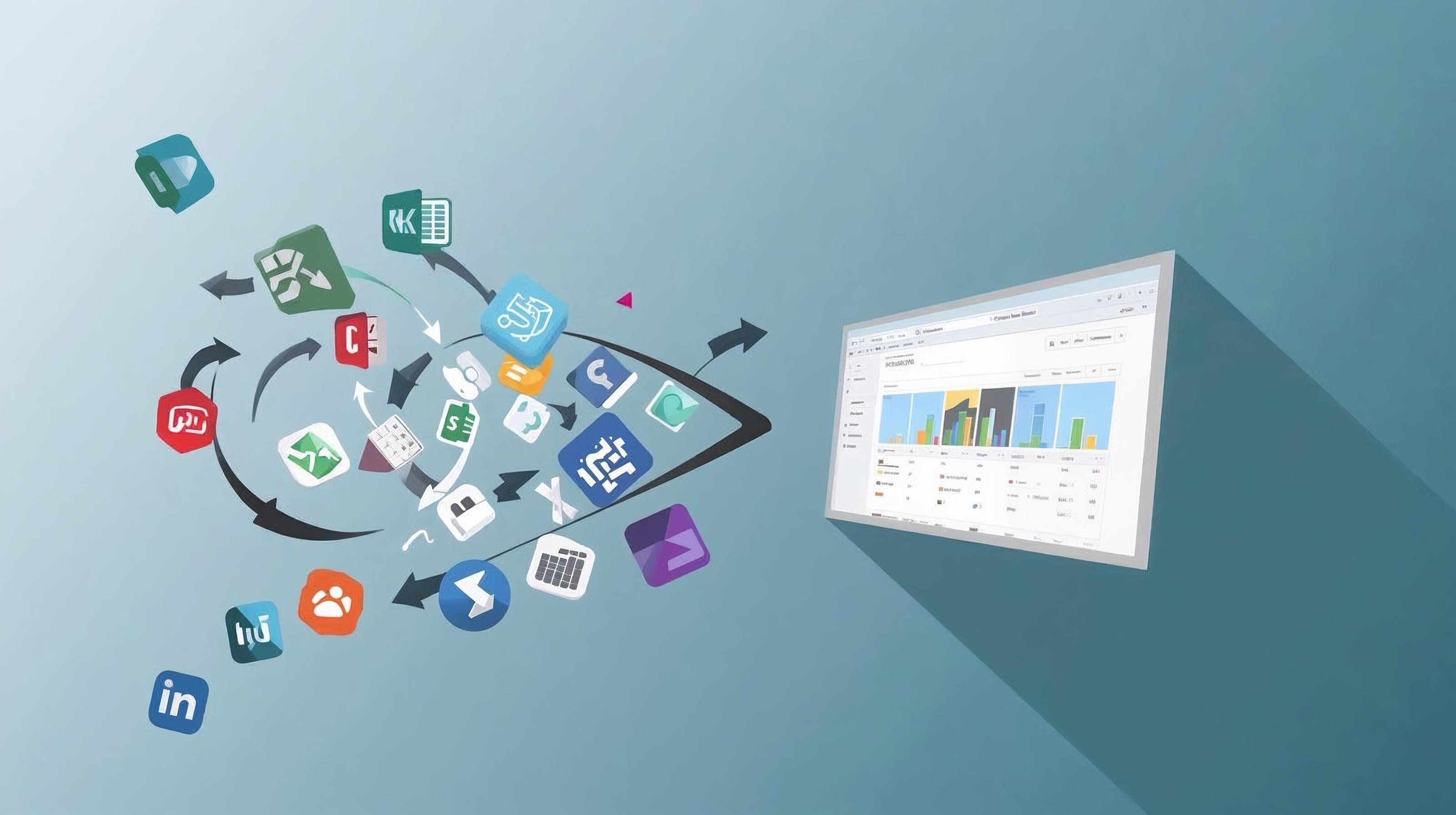
One of the most common structural weaknesses in growing businesses is fragmented data. As companies scale, they often adopt tools incrementally — one for invoicing, another for communication, another for project management, and yet another for customer records.
- Customer details stored in a CRM
- Invoices created in accounting software
- Tasks tracked in spreadsheets
- Team conversations happening in chat applications
Individually, these tools may function well. Collectively, they create fragmentation. Information becomes siloed. Team members must switch between platforms. Managers struggle to see the full operational picture.
This fragmentation slows decision-making, increases the risk of miscommunication, and creates dependency on manual data transfers between systems.
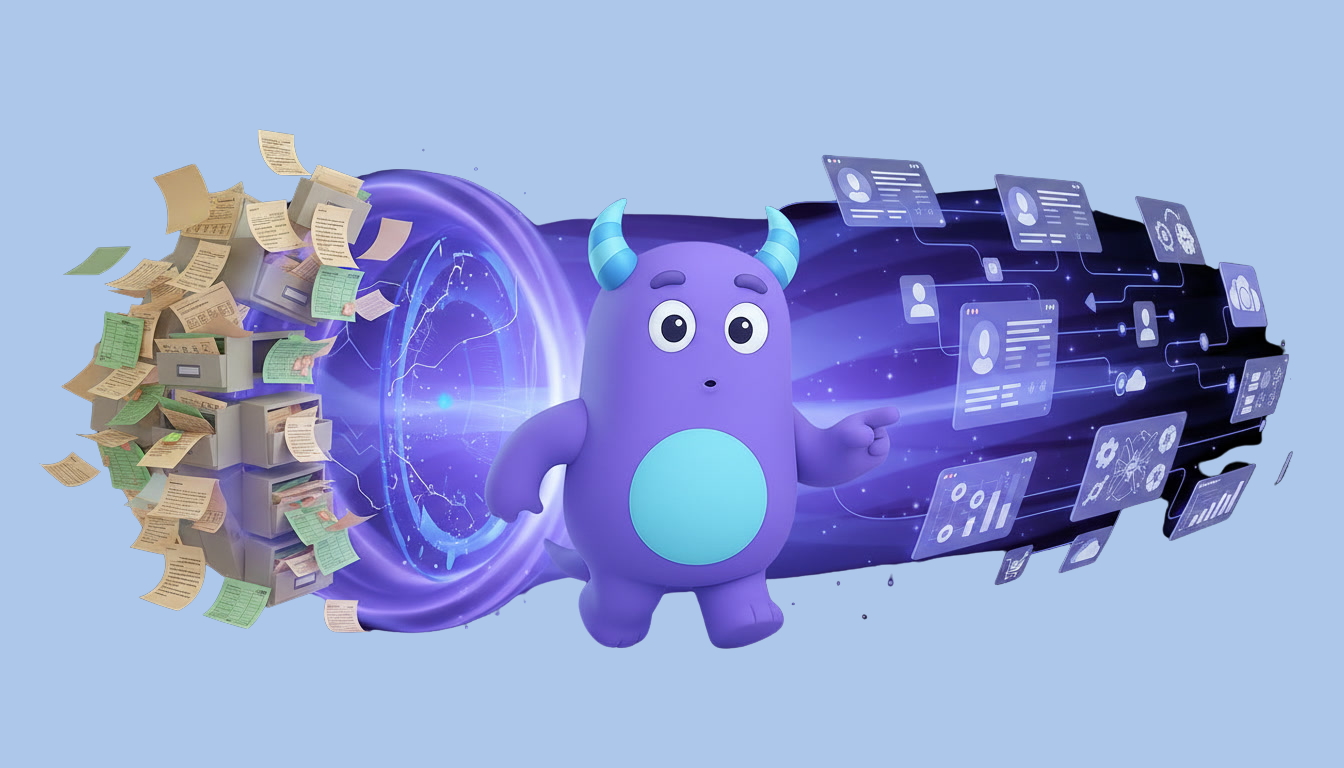
An ERP system addresses this problem by centralizing core business data into one structured environment. Customer information, financial records, operational workflows, and reporting metrics are connected rather than isolated. This integration reduces confusion, accelerates access to insights, and creates a unified source of truth across departments.
Problem #2: Revenue Without Financial Visibility
Many service-based businesses experience revenue growth while simultaneously losing financial clarity. They may know how much money is coming in each month, but lack visibility into deeper performance indicators.
For example:
- Which services generate the highest profit margins?
- Which clients are resource-intensive but low-margin?
- Where are operational costs increasing over time?
- What does realistic cash flow look like three months ahead?
Without integrated financial and operational data, these questions require manual analysis — often through spreadsheets that may already be outdated by the time reports are compiled.
ERP systems connect revenue to operations. They link projects directly to associated expenses. They allocate costs to departments or service lines. They provide dashboards that reflect real-time financial performance.
This shift transforms profitability from assumption to measurable reality.
Problem #3: Operational Bottlenecks and Coordination Gaps
As teams expand, coordination becomes exponentially more complex. What once worked through informal communication begins to break down. Responsibilities overlap. Approval chains slow execution. Customer requests may be delayed due to unclear ownership.
These bottlenecks rarely stem from lack of effort. They emerge from lack of structured process design.
ERP systems introduce clearly defined workflows. Tasks are assigned with accountability. Status tracking becomes transparent. Approvals move through predefined channels. Automation reduces repetitive manual interventions.
By formalizing operational processes, ERP systems reduce friction and create consistency. This not only improves efficiency internally but also strengthens customer experience externally.
Problem #4: Manual Processes That Fail at Scale
In early stages, manual systems often feel sufficient. Invoices can be created individually. Reports can be assembled periodically. Follow-ups can be tracked in spreadsheets.
However, as volume increases, manual processes become fragile. They depend on memory, discipline, and constant supervision. Errors become more likely. Time consumption grows disproportionately.
Examples of manual strain include:
- Creating invoices one by one without automation triggers
- Sending payment reminders manually
- Compiling performance reports from multiple tools
- Managing approval flows through informal messaging
ERP systems replace memory with automation. Billing can be triggered by project milestones. Payment reminders can be scheduled automatically. Reports can be generated in real time. Approval workflows can operate independently of constant managerial oversight.
This not only reduces errors but also frees leadership time for strategic decision-making.
Problem #5: Lack of Real-Time Decision Intelligence
Without integrated systems, executive decisions often rely on partial or delayed information. Managers may review financial data weeks after transactions occur. Operational reports may not reflect current workloads or bottlenecks.
ERP systems provide real-time dashboards that connect revenue, expenses, project status, and team performance into a single view. This level of visibility enables proactive management rather than reactive problem-solving.
Instead of discovering issues after they escalate, leadership can identify trends early and adjust course strategically.
Real Example: A Service Company Before and After ERP
Consider a growing training center managing student enrollments in spreadsheets, instructor schedules in shared calendars, invoices in standalone accounting software, and payments tracked manually.
Initially, this setup functions. But as student volume increases, coordination becomes fragile. Billing discrepancies emerge. Communication gaps widen. Financial forecasting becomes unreliable.
After implementing ERP integration:
- Enrollment automatically triggers invoicing workflows
- Attendance data connects to billing adjustments
- Instructor scheduling aligns with revenue planning
- Financial reports generate dynamically
The transformation is not cosmetic. It is structural. Chaos is replaced with clarity. Fragmentation is replaced with integration.
ERP Is Not About Size — It Is About Structural Readiness
A common misconception is that ERP adoption depends on employee count. In reality, ERP becomes relevant when complexity begins exceeding manual coordination capacity.
If your business experiences increasing operational friction, declining financial visibility, or difficulty scaling processes consistently, the issue is not size — it is structure.
The earlier structure is implemented, the smoother long-term growth becomes.
Final Reflection
ERP systems do not automatically generate growth. They do not replace strategy or leadership.
What they do is remove structural friction that quietly restricts scalability. They connect isolated systems into a unified framework. They transform reactive management into predictable execution.
The real question is not whether ERP is “too advanced” for your company.
The more strategic question is this: how much complexity are you currently managing without integrated structure?
When complexity outpaces coordination, ERP stops being optional — and becomes foundational.
.jpg)

.jpg)