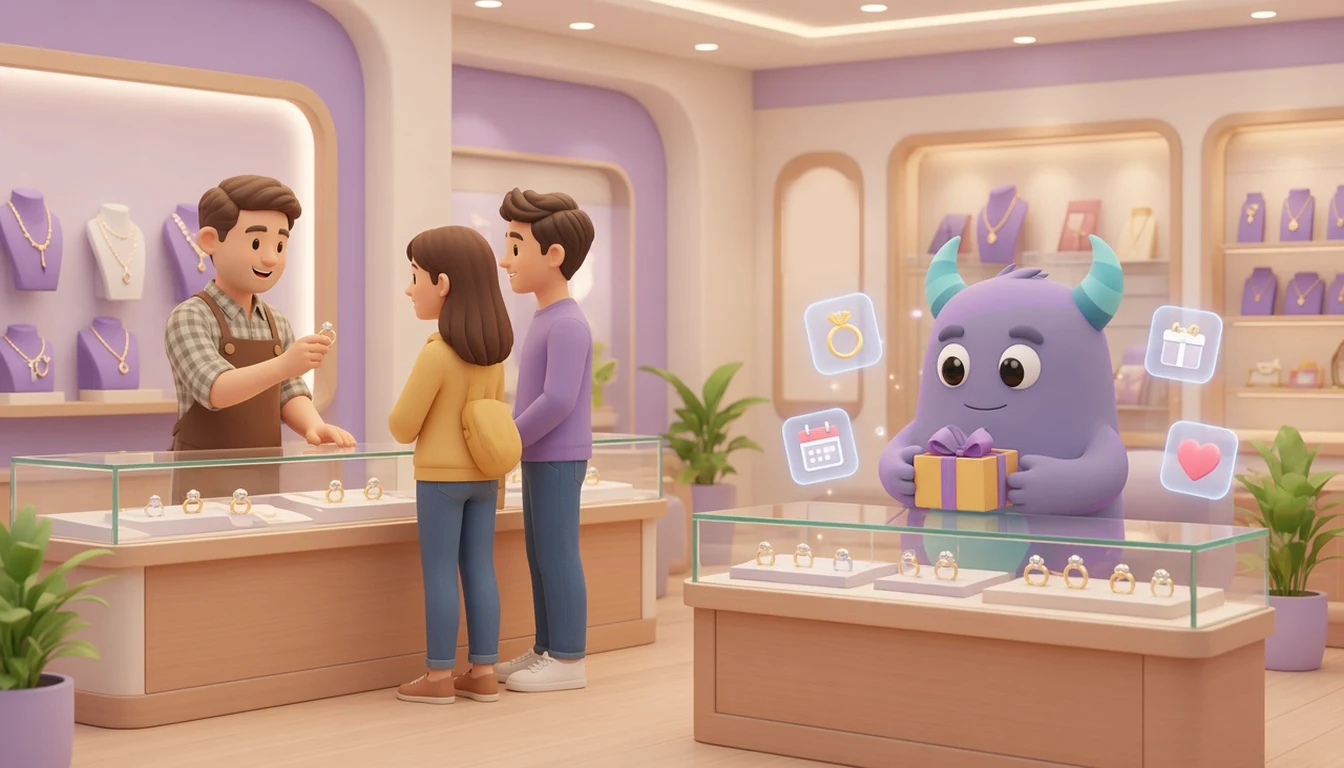

A jewelry store CRM keeps every client"s purchases, ring sizes, preferences, custom design requests, repairs and special dates in one record, so your team can follow up personally and invite clients back for the moments that matter. Jewelry is bought for engagements, weddings, anniversaries, birthdays and holidays. The same client may come back many times over the years, but only if your store remembers them better than the shop next door. This guide is for independent jewelers, jewelry boutiques, goldsmith workshops and small jewelry chains that want to turn one purchase into a lasting relationship.
Key takeaways
- A jewelry store CRM stores client preferences, sizes, purchase history and important dates on one client card.
- Occasion reminders for anniversaries, birthdays and holidays are one of the most natural reasons to contact a client again.
- Custom design and repair jobs need clear stages, owners and promised dates so nothing is lost or delayed.
- Wish lists and gift notes help partners and family members buy the right piece with confidence.
- Track repeat purchase rate, custom order lead time, repair turnaround and occasion campaign response.
What is a jewelry store CRM?
A jewelry store CRM is customer relationship management software used to manage the full relationship with each client: contact details, what they bought and when, ring and bracelet sizes, metal and stone preferences, custom design requests, repair and cleaning visits, and personal dates such as anniversaries. It helps sales staff give personal service in the showroom and follow up after the visit without relying on memory or a notebook.
Unlike a general retail system that focuses on stock and checkout, a CRM focuses on the person. In jewelry, where purchases are emotional, expensive and often planned weeks in advance, that personal knowledge is what brings clients back.
Common problems in jewelry stores
Client knowledge lives with one salesperson
A trusted salesperson may know a client"s style, sizes and family, but when that person is off or leaves, the knowledge leaves too.
Long decisions with no follow-up
Engagement rings and high-value pieces are rarely bought on the first visit. Clients look, compare and think. Without a reminder, the follow-up call never happens and the sale goes elsewhere.
Custom orders and repairs slip
Custom designs, resizing, engraving, stone setting and repairs pass between the showroom, the workshop and sometimes outside suppliers. When the status sits on paper envelopes, promised dates are missed and clients call to ask what is happening.
Special occasions pass unnoticed
Many clients would gladly return for an anniversary or a birthday gift, but stores rarely record those dates, so the best moments to reach out are missed.
Holiday campaigns go to everyone
Sending the same promotion to every client ignores the difference between someone who buys fine watches and someone who collects silver charms.
Key features of a jewelry store CRM
Detailed client profiles
Record contact details, preferred contact channel, sizes, metal and stone preferences, style notes and purchase history. Every team member sees the same information and can continue the conversation.
Important dates and occasion reminders
With the client"s permission, store anniversaries, birthdays and other occasions, and create reminders a few weeks ahead so staff can suggest a gift idea in good time.
Wish lists and gift notes
Note pieces a client admired but did not buy. When a partner or family member asks for gift advice, the store can make a confident suggestion.
Custom design pipeline
Track each custom piece through stages such as consultation, design approved, deposit received, in workshop, ready for collection and collected, with an owner and a promised date.
Repair, resizing and cleaning log
Log every service job with what was received, its condition, the work agreed and the promised date. Clear records protect both the client and the store.
Segments for relevant campaigns
Group clients by purchase type, budget range, last purchase date or occasion month to send campaigns that feel personal. Our guide to RFM analysis shows how to find your most valuable clients.
Notebooks versus a jewelry store CRM
| Area | Notebooks and memory | Jewelry store CRM |
|---|---|---|
| Client preferences and sizes | Known by one salesperson | Shared on one client card |
| Follow-up after a visit | Often forgotten | Task with a date and owner |
| Custom orders | Paper envelopes and phone calls | Clear stages and promised dates |
| Repairs and resizing | Hard to trace | Logged with condition and status |
| Anniversaries and birthdays | Not recorded | Reminders ahead of each occasion |
| Campaigns | Same message to everyone | Segmented by taste, budget and timing |
How to set up a CRM for your jewelry store
- List your client touchpoints. First visit, consultation, purchase, custom order, collection, repair, cleaning and gift occasions. Each one becomes a stage, task or reminder.
- Choose the fields you will actually use. Sizes, metal and stone preferences, budget range, occasion dates and preferred contact channel are a strong start. Record consent for marketing messages.
- Import existing clients. Bring in clients from your sales records and notebooks, starting with the last few years. Our Excel to CRM migration guide explains how to prepare the data.
- Build pipelines for custom work and repairs. Create separate stages for custom designs and for service jobs, and agree who owns each stage.
- Set follow-up rules. For example, a follow-up task two days after a consultation, a thank-you message after collection and a check-in after a repair.
- Create occasion reminders. Schedule reminders a few weeks before anniversaries, birthdays and key holidays for clients who agreed to receive them.
- Agree on one team habit. Every consultation, purchase and service job is logged on the client card before the end of the day.
- Review monthly. Check open custom orders, overdue repairs and follow-ups that were not completed, then improve your stages and templates.
How Lua CRM supports jewelry stores
Lua CRM brings contacts, deals, tasks and customer communication into one system, so a jewelry store can keep rich client cards, manage custom orders as deals moving through a sales pipeline and assign follow-up tasks to the right salesperson. CRM automation helps turn occasion dates and job stages into reminders. Stores that sell everyday fashion jewelry alongside fine pieces can also borrow ideas from our clothing store CRM guide.
Best practices for jewelry client relationships
Capture details during the conversation
Sizes, favorite styles and the reason for the purchase are easy to note while talking with the client and very hard to remember a year later.
Follow up on considered purchases
For engagement rings and high-value pieces, a polite follow-up after a few days, with photos of the pieces the client liked, keeps the conversation going without pressure.
Communicate clearly on custom and repair jobs
Send a short update at each key stage and tell clients right away if a date changes. Proactive updates build the trust that jewelry clients expect.
Make occasions personal, not pushy
An anniversary reminder works best when it suggests something relevant to the client"s taste or a piece from their wish list, not a generic discount.
Reward referrals
Happy clients bring friends and family. A simple customer referral program turns that word of mouth into a repeatable channel.
Illustrative example: a family-owned jewelry boutique
Imagine a family-owned boutique with three salespeople and a small workshop. Client details were kept in a notebook at the counter, and repairs were tracked with paper tags. After moving to a CRM, the team created client cards with sizes and preferences, set up separate pipelines for custom designs and repairs and recorded anniversaries for clients who agreed to receive reminders. Before each holiday season, they reviewed wish lists and sent personal suggestions instead of one general promotion. Repair calls became shorter because anyone could see the status. This is a hypothetical example to show the workflow, not a measured case study.
Metrics to track
Repeat purchase rate
Clients who bought again within a year ÷ all clients who bought in the earlier period.
Consultation-to-sale conversion
Consultations that led to a purchase or custom order ÷ all consultations in the period.
Custom order lead time
Average days from design approval to collection, and the share of orders delivered by the promised date.
Repair turnaround
Average days from receiving a repair to the client collecting it.
Occasion campaign response
Clients who visited or bought after an occasion reminder ÷ clients who received one. Our article on CRM KPIs shows how to track these numbers over time.