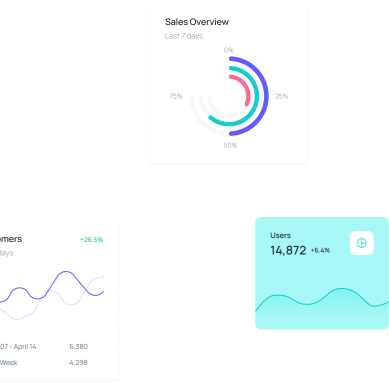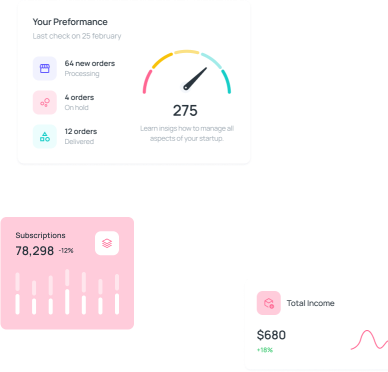


Customer Relationship Management (CRM) software is no longer a tool used only by large enterprises. Today, small and medium-sized businesses rely on CRM systems to manage relationships, improve sales efficiency, and coordinate marketing and support activities. A simple CRM focuses on the essentials: keeping customer data organized, supporting daily work, and helping teams stay on top of tasks without unnecessary complexity.
Many companies have already started using basic sales or customer management tools, while others are still trying to decide which simple CRM will fit their needs best. If you belong to the second group, this article will help you understand what to look for and present five simple CRM options to consider in 2026.
What Is a Simple CRM?
A simple CRM is a client management system designed to be easy to set up, easy to use, and focused on the most important functions. It helps businesses store and organize customer information, track interactions and activities, and follow the progress of leads and deals. The goal is to give everyone in the company a clear view of each customer so they can respond quickly and deliver a more personalized experience.
Some simple CRMs provide only core features like contact management, notes, and basic deal tracking. Others offer additional capabilities such as dashboards, email integration, light automation, and basic reporting, while still remaining easy to understand. The common characteristic is that they do not overwhelm users with complexity.
Key Benefits of Using a Simple CRM
For many small businesses, a simple CRM becomes the central place where customer data, activities, and sales information are stored and accessed. Instead of searching across spreadsheets, email threads, and messaging apps, teams can find everything in one system.
Some of the main benefits include:
- Delivering better customer experience by having history and context available in one place.
- Improving segmentation so you can send more relevant offers and follow-ups.
- Building trust and loyalty by maintaining regular, structured, and personal communication.
- Improving collaboration between sales, marketing, and support teams.
- Streamlining sales processes using past data and repeatable workflows.
- Capturing and nurturing new leads more systematically.
- Gaining insight into performance through basic reports and simple analytics.
- Keeping customer information secure and centralized instead of scattered.
Is a Simple CRM Useful for Small Businesses?
Yes. A simple CRM is especially useful for small businesses. Even if your team is small, you still need a structured way to track leads, customer conversations, and sales opportunities. Relying only on email and spreadsheets quickly becomes difficult once the number of contacts and deals starts to grow.
Using an easy-to-use CRM early on helps you build an organized customer base, understand your sales cycle, and avoid losing opportunities because someone forgot to follow up. At the same time, simple CRMs are usually more affordable and require less training, which is ideal for smaller teams.
What Features Should a Simple CRM Include?
Each business has its own requirements, but there are some features that most companies should expect from a simple CRM.
Contact and Company Management
At the core of any CRM is the ability to store customer and lead details. A good simple CRM lets you keep all relevant information in one place: contact details, company information, communication history, notes, and files. It should be easy to search, filter, and update records so your team can work quickly.
Tasks, Reminders, and Follow-Ups
People have many things to manage every day, and it is easy to forget an important call or email. A practical CRM allows you to create tasks, schedule follow-ups, and set reminders, so you do not rely on memory alone. This also supports a more consistent sales and customer service process.
Collaboration and Activity Tracking
A simple CRM should make it easier for teams to work together. Everyone involved with a customer should be able to see previous interactions, open deals, and upcoming tasks. This is especially important when multiple people handle the same account or when different departments, such as sales and support, need to collaborate.
Pipeline or Deal Tracking
Even in a simple system, it is useful to see where each opportunity stands. A basic visual pipeline with stages (for example: new lead, contacted, proposal sent, won, lost) helps teams understand what is happening in the sales process, identify bottlenecks, and improve conversion rates.
How to Choose a Simple CRM Software
There are many CRM options on the market, and not all of them are suitable for small teams looking for simplicity. When choosing a simple CRM, consider the following points:
Ease of Use
A simple CRM should be intuitive. The interface should be clear, navigation should be straightforward, and basic tasks should not require training. If your team finds the system complicated, they will avoid using it, and the CRM will not deliver value.
Pricing
Budgets vary, but small businesses often need predictable and affordable pricing. Look for clear plans without hidden costs and make sure the features in the plan match what your team actually needs. A very cheap tool that does not fit your workflow is not a good investment.
Customization
Even a simple CRM should allow some level of customization. You should be able to adjust fields, views, and basic workflows so that the system matches your sales process rather than forcing you into a rigid structure. Especially for service businesses, flexibility is important.
Integrations
Your CRM will work best if it can connect to the tools you already use, for example email, calendar, phone, or project management. Check which integrations are available and whether you can connect via API if you have more advanced needs.
Support and Documentation
Responsive support can save you time and frustration. When comparing simple CRM systems, look at the availability of help articles, onboarding materials, and direct support channels such as chat or email. Good support usually leads to smoother adoption.
5 Best Simple CRM Tools to Use in 2026
Now that we have covered what a simple CRM is and what to look for, here are five solutions that are well suited for small and service-based businesses in 2026.
1. Lua CRM
Lua CRM is a cloud-based simple CRM built especially for service businesses and growing teams that want an all-in-one system without complexity. The interface is designed to be clear and easy to use, so teams can start working quickly without long implementation.
With Lua CRM, you can manage leads, customers, deals, and projects in one platform. The system supports lead capture, qualification, and conversion, as well as integrated communication via email and other channels. This makes it easier to keep a complete history of interactions and ensure that no opportunity is forgotten.
Lua CRM also includes built-in automation. Instead of handling every step manually, you can set up simple rules to send follow-up emails, create tasks, or move deals through stages when certain conditions are met. This reduces repetitive work and helps maintain a consistent process.
In addition to CRM features, Lua CRM offers tools for project management, finance, and operations, which is useful for service businesses that want to run most of their daily operations in a single system. Reporting and dashboards give an overview of sales performance and team activity.
You can try Lua CRM with a free trial and then choose from several paid plans depending on the number of users and features you need, making it suitable for both small teams and growing organizations.
2. Simple pipeline-focused CRM
This type of CRM focuses on visual deal pipelines and straightforward lead tracking. It is ideal for businesses that mainly need to follow sales opportunities from first contact to closing. Core features usually include contact management, pipeline stages, activities, and basic reporting.
The main advantage is clarity: sales teams can see all open deals at a glance, understand what needs attention, and avoid clutter from features they do not use. These CRMs are a good choice if your priority is sales pipeline visibility.
3. Lightweight CRM with strong email integration
Some simple CRM tools are built around email. They automatically log messages, track conversations by contact, and link communication to deals. These systems work well for businesses that spend most of their time in their inbox and want a CRM that fits naturally into that workflow.
Such tools typically offer contact management, basic pipeline features, tasks, and email tracking, without heavy configuration. They are suitable if you want better structure around email-based sales without a full, complex system.
4. Simple CRM as part of a small business suite
Another option is to use a CRM that is part of a broader business suite that may include invoicing, basic accounting, or marketing tools. These platforms are attractive for small businesses that want several connected tools from one provider and do not want to manage many separate subscriptions.
The CRM component in these suites is often straightforward and focuses on core functionality, while the benefit comes from having data shared across modules such as billing and projects.
5. Minimalistic contact and deal manager
At the most basic level, there are CRMs that act as enhanced contact lists with simple deal tracking. They are designed for freelancers, solo entrepreneurs, or very small teams that want something more structured than a spreadsheet but do not need advanced features.
These tools typically provide contacts, notes, simple pipelines, and reminders. They may not scale as much as more complete systems, but they are very easy to adopt and can be a good starting point for businesses at an early stage.
Conclusion
A simple CRM can make a significant difference in how a business manages relationships, organizes daily work, and converts opportunities into revenue. The right system should be easy to understand, quick to implement, and aligned with how your team already works.
Whether you choose an all-in-one platform like Lua CRM or a minimal pipeline-focused tool, the key is to select software that your team will actually use. Once your data, activities, and communication are centralized, it becomes much easier to serve customers well, measure progress, and grow with confidence in 2026 and beyond.
.jpg)
.jpg)
.jpg)